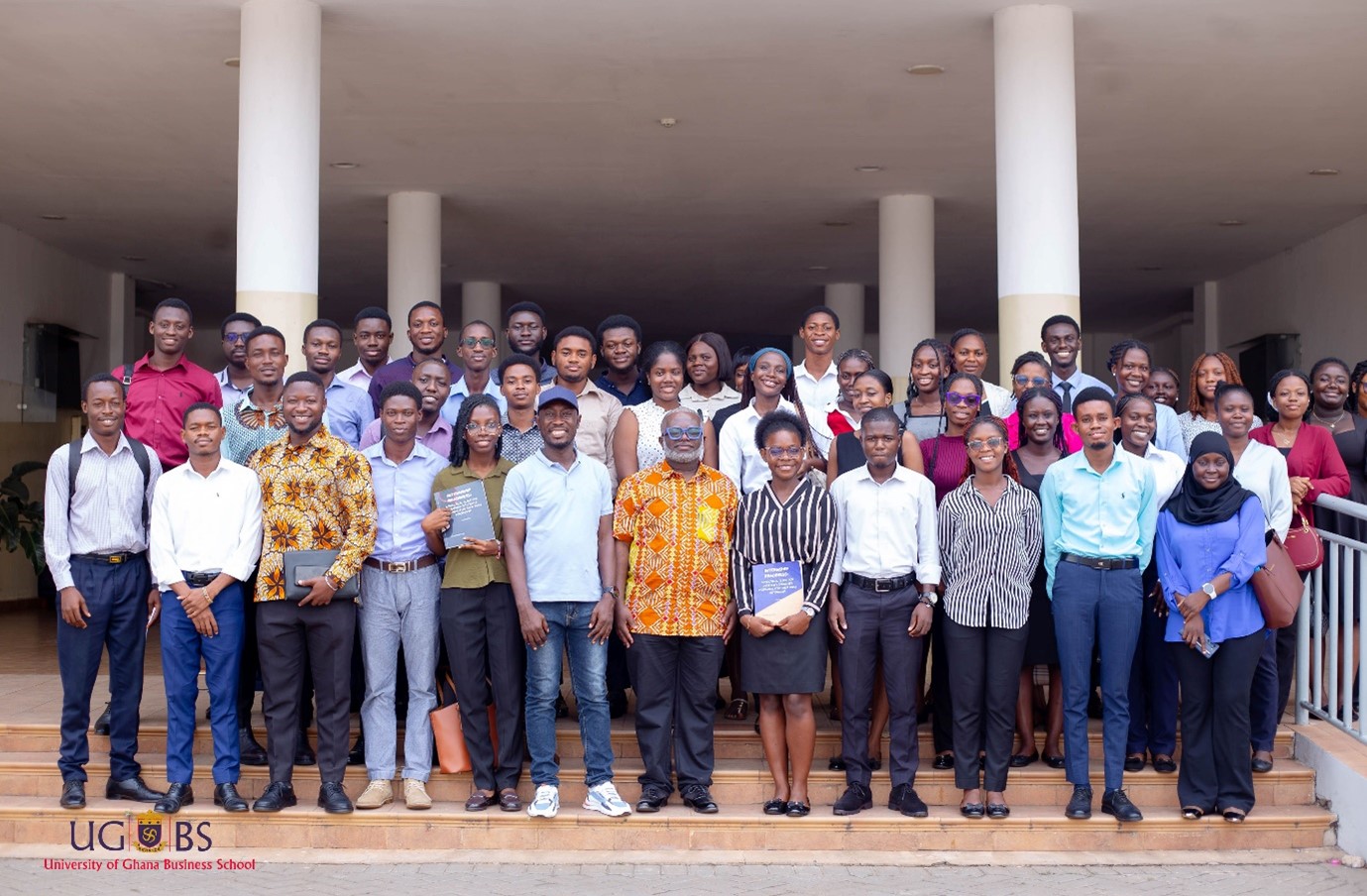
UGBS Department of Accounting Organises an Internship Readiness Seminar to Prepare Level 400 Students for the Competitive Job Market
The Department of Accounting at the University of Ghana Business School (UGBS) has organised an Internship Readiness seminar for Level 400 students, positioning the initiative as a gateway to formal employment in today’s competitive job market. The session was held on 27th February 2026 at the UGBS Graduate Building, and brought together faculty, administrators and final-year students to equip them with the knowledge, skills and mindset required to transition successfully from the classroom to the workplace. Prof. Godfred Matthew Yaw Owusu, Head of the Department of Accounting facilitated the session while the training was led by Prof. Richard Boateng of the Operations and Management Information Systems (OMIS) Department.
Welcoming students to the seminar, Prof. Francis Aboagye-Otchere noted that the training forms part of a partnership between the Department of Accounting and the Institute of Chartered Accountants, Ghana (ICAG). He explained that the initiative is designed to prepare all accounting students adequately for internships and the world of work. He revealed that the Department is working to provide an exceptional academic and professional experience for students from the onset of their accounting degree at UGBS. Prof. Aboagye-Otchere encouraged students to be attentive and actively involved in the training, stressing that the Department is committed to shaping competent and industry-ready graduates.

Prof. Francis Aboagye-Otchere addressing students
In his remarks, Prof. Godfred Matthew Yaw Owusu indicated that the Department has designed an Excel training model tailored for accounting students and is currently finalising its mode of delivery. He explained that the initiative seeks to ensure that students do not struggle with practical tools when they enter the field of work. It is the Department’s mission, he said, to equip students with the necessary accounting software skills before they graduate. According to him, students will no longer have to wait until after graduation to pursue professional accounting accreditation or join professional associations. Instead, elements of professional certification will be incorporated into the four-year degree programme, enabling students to potentially complete their Chartered Certificate before graduation.
The School Administrator, Mr. Emmanuel Poku-Sarkodee, commended the Head of Department and faculty for their handwork and forward-thinking initiatives. He noted that the Internship Readiness seminar aligns with the mission of UGBS to be a world-class business school that develops global leaders. He urged students to uphold high ethical standards in their professional careers, remain committed, and represent the school well wherever they go. He emphasised that students must strive to be reliable and impactful interns to enhance their employability prospects.
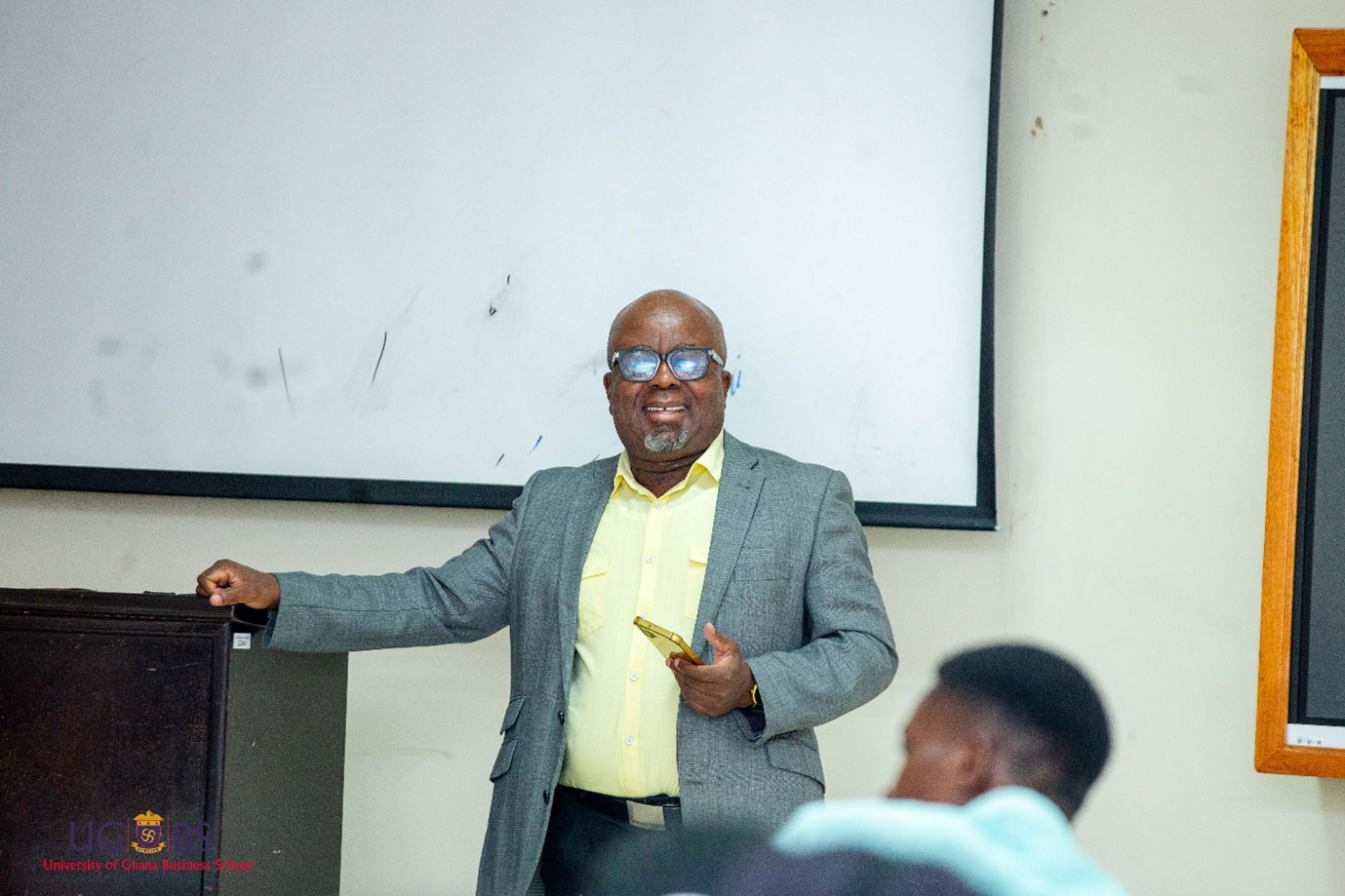
Mr. Emmanuel Poku-Sarkodee commending the department and students
Prof. Boateng commenced his presentation with a focus on “Understanding the Meaning and Purpose of an Internship,” setting the tone for a comprehensive discussion on the strategic importance of internships in professional development. Prof. Richard Boateng provided an in-depth overview of internships within contemporary professional contexts. He explained that internships should not be perceived as mere attachments, free labour, or academic formalities. Rather, they are structured, high-stakes developmental experiences that bridge academic theory and workplace practice, with relevance to Ghanaian, broader African, and European professional environments. He noted that such experiences enable university students to apply academic concepts in authentic settings while deliberately developing workplace competencies under professional guidance.
The session also addressed common misconceptions about internships. Prof. Boateng clarified that interns are not expected to know everything before starting; internships are not solely for grades; interns are taken seriously when they demonstrate competence and professionalism. High-level responsibility is typically earned progressively; and internships do not have to be paid to be valuable. He added that high-performing interns frequently secure graduate employment opportunities, particularly within competitive African labour markets. Internships also facilitate identity formation, help students transition from classroom-based thinking to organisational reasoning, and support the development of professional voice, confidence, and ethical identity.
As part of the training, students were guided through a reflective exercise to enhance their internship readiness. They were encouraged to define the professional identity they intend to build, identify three technical skills and three soft skills they wish to strengthen, determine the type of organisational culture that best aligns with their values and personality, and establish clear measures of success beyond hours completed or grades awarded. Students were advised to revisit these reflections at the midpoint and end of their internships to assess growth and learning outcomes.