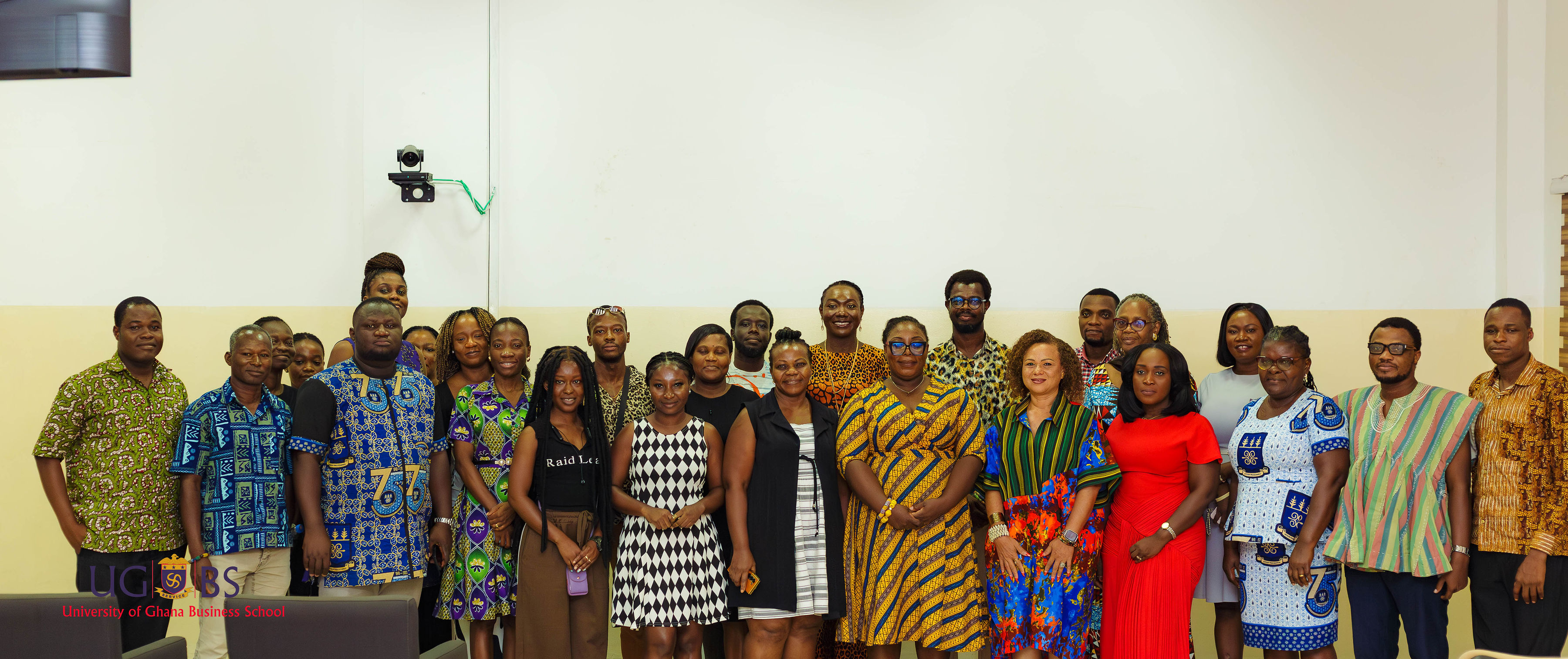
The BoG Chair in Finance and Economics at UG, Prof. Alagidede Organises Indigenous Enterprises Seminar on Women, Wealth and Wellbeing for Africa’s Development
The Indigenous Enterprises Seminar Series, convened under the Bank of Ghana Chair in Finance and Economics at the University of Ghana, has held a seminar on the theme “Women, Wealth & Wellbeing: Harnessing Female Enterprise for Africa's Development.” The event was organised by Prof. Paul Yegandi Imhotep Alagidede and took place on 15th April 2026 at the UC Cedi Conference Centre. The session was moderated by Dr. Aisha Adams. It aimed at integrating women’s economic participation with wellbeing considerations, highlighting that sustainable development in Africa depends on empowering women entrepreneurs through supportive systems, inclusive policies and institutional commitment.
Delivering the reopening remarks, Dr. Abigail A. Aryeh-Adjei from the Department of Adult Education and Human Resource Studies emphasised that although women’s entrepreneurship across Africa is widely recognised as a driver of economic growth and poverty reduction, women-led enterprises often operate within challenging environments that extract value from their labour without safeguarding their wellbeing. She noted that women’s businesses sustain households and local economies, with income frequently reinvested in children’s education, nutrition and healthcare. However, she highlighted persistent barriers such as limited access to affordable credit, financial products that overlook women’s realities, and the burden of unpaid care work.
She explained that this creates a development paradox in which women remain economically active yet often report lower wellbeing. According to her, enterprise alone cannot serve as a solution to poverty without supportive systems. She called for gender-responsive policies, including inclusive financial products, digital innovations, mentoring networks, childcare support, social protection and legal reforms. She further stressed that women entrepreneurs are diverse and require tailored interventions. Dr. Aryeh-Adjei concluded by urging policymakers and institutions to centre women’s wellbeing in economic strategies, noting that sustainable development depends on building enterprises grounded in dignity, protection and genuine opportunity.
Also speaking, Prof. Nkechi Owoo of the Department of Economics indicated that placing women at the centre of such seminar reflects a deliberate institutional commitment to understanding how gender shapes economic behaviour, enterprise formation and wellbeing. She explained that the Indigenous Enterprises Seminar Series aligns with the department’s focus on evidence-based and policy-relevant economics. Reflecting on the theme, she highlighted that African women already possess the capability and drive for enterprise but often lack supportive infrastructure, recognition and institutional backing.
Drawing on her research, Prof. Owoo noted that women’s labour across domestic, agricultural and entrepreneurial spaces remains undercounted, while the economic, social and reproductive burdens they bear are disproportionate to the resources and returns they receive. She also discussed the “economics of invisibility,” explaining that occupational advancement does not always translate into security, and that domestic and childcare responsibilities carry measurable psychological costs. She added that women’s labour market outcomes are shaped early by education, geography, household dynamics and social norms, underscoring the need to address structural constraints affecting women’s participation and enterprise development.
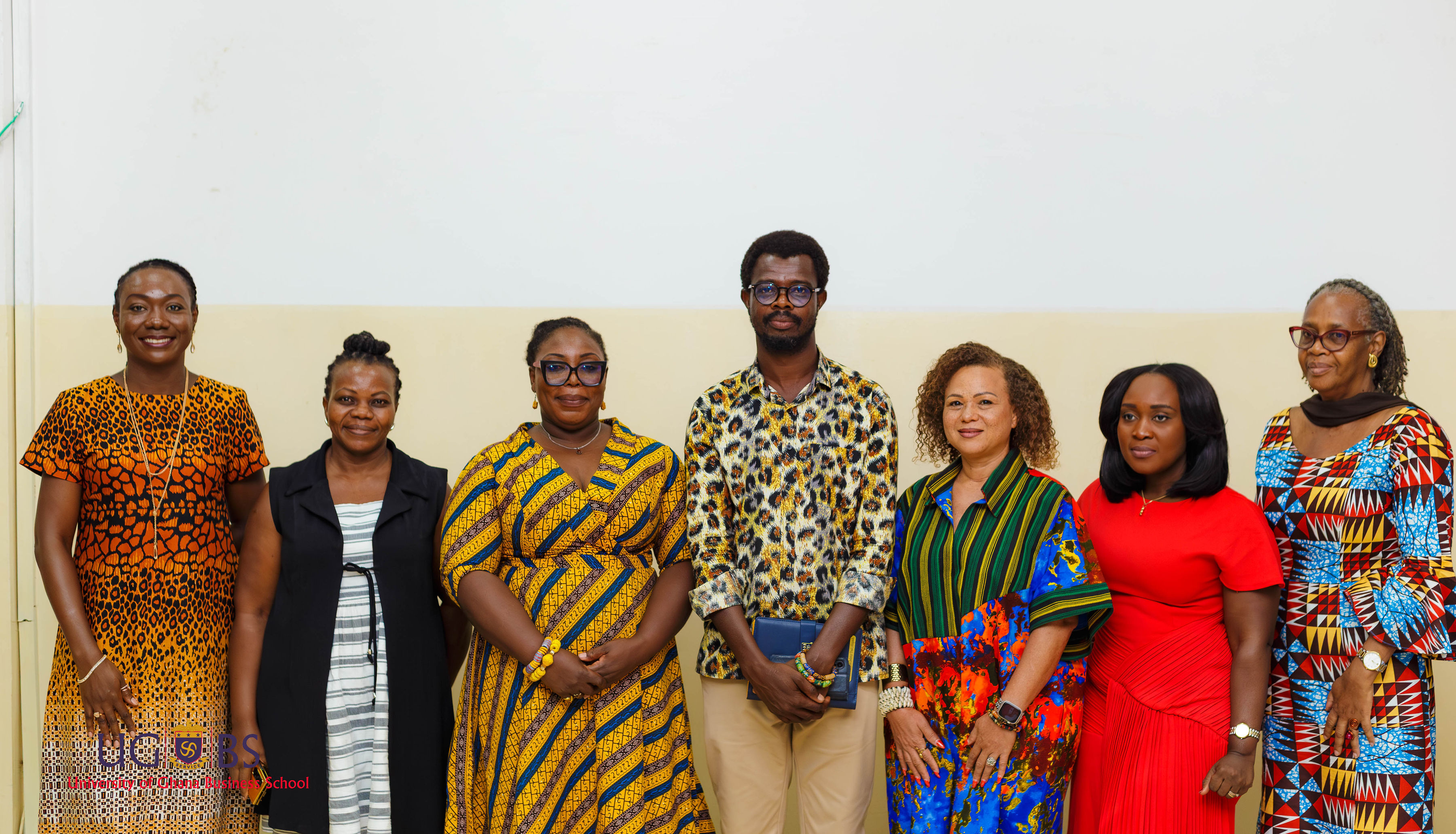
Prof. Alagidede with Speakers at the Seminar
Dr. Yvonne Agbetsoamedo, CEO of IMAAMI Groups, spoke on the topic “From Margin to Mainstream: Women-Led Enterprises as Drivers of Africa's Economic Growth.” She observed that although women constitute a significant share of Africa’s entrepreneurial base, many operate within informal and low-growth sectors, creating what she described as a paradox of high participation but low impact at scale. She emphasised the need for Africa to reconfigure its economic systems to ensure that women-led enterprises become central drivers of growth.
Dr. Agbetsoamedo outlined key constraints to scaling women-owned businesses, including limited access to finance, market access barriers, skills and capacity gaps, legal and institutional challenges, and restrictive social and cultural norms. She proposed financial system reforms such as gender-responsive financing models, collateral-free lending innovations, blended finance and guarantee schemes, and the establishment of dedicated women enterprise funds. She concluded that women-led enterprises should not be treated as a “side issue” but as integral to Africa’s growth story, stressing that moving women-owned businesses from the margins to the mainstream requires deliberate economic and policy choices.
Madam Yvonne MacCarthy, Founder of ICSP, spoke on the topic “Leading with Purpose: Women in Business and the Transformation of Africa’s Economic Landscape.” She emphasised that while women often possess passion and drive, they must identify their purpose and define their “why” before venturing into business or professional pursuits. She encouraged women to use their personal stories strategically to inspire others and build visibility for their enterprises. She explained the importance of data in decision-making, describing it as a powerful tool for leverage and impact. She further advised women to build institutions rather than only businesses by incorporating strategy, professionalism and long-term structures that create opportunities for others. She also spoke about the importance of customer service in enterprise growth and encouraged women to prioritise self-care, mental health and overall wellbeing as part of sustainable leadership.
Mrs. Lordy Emmen, CEO and Co-founder of TGR Africa, delivered a presentation titled “Whole and Wealthy: The Intersection of Women’s Wellbeing, Enterprise and Sustainable Development in Africa.” She emphasised that Africa’s development depends on ensuring women are both economically empowered and holistically supported. She noted that although Sub-Saharan Africa records the highest rate of women’s entrepreneurship globally, women’s significant participation does not translate into proportional economic impact due to structural barriers such as limited access to finance, property rights constraints and cultural expectations around caregiving.
Mrs. Emmen highlighted that women constitute a large share of Africa’s self-employed population but contribute a relatively small portion of GDP, underscoring systemic challenges and the undervaluation of women’s work. She explained that women-led enterprises play vital roles in sustaining families, creating jobs, strengthening health outcomes and stabilising local economies, yet many women entrepreneurs face a “double burden” of business responsibilities and unpaid care work. She called for targeted interventions, including improved access to capital, digital inclusion, policy reforms, mentorship networks, childcare support and wellbeing infrastructure. According to her, an Africa where women are financially empowered, physically healthy, mentally supported and able to lead will be more prosperous and resilient.
The session continued with a conversational discussion and a questions-and-answers segment, where participants raised issues related to access to finance, structural barriers, mental wellbeing, institutional support and policy reforms needed to strengthen women-led enterprises across Africa. Prof. Linda Tsevi expressed appreciation to all participants for their active engagement and contributions, bringing the seminar to a close.