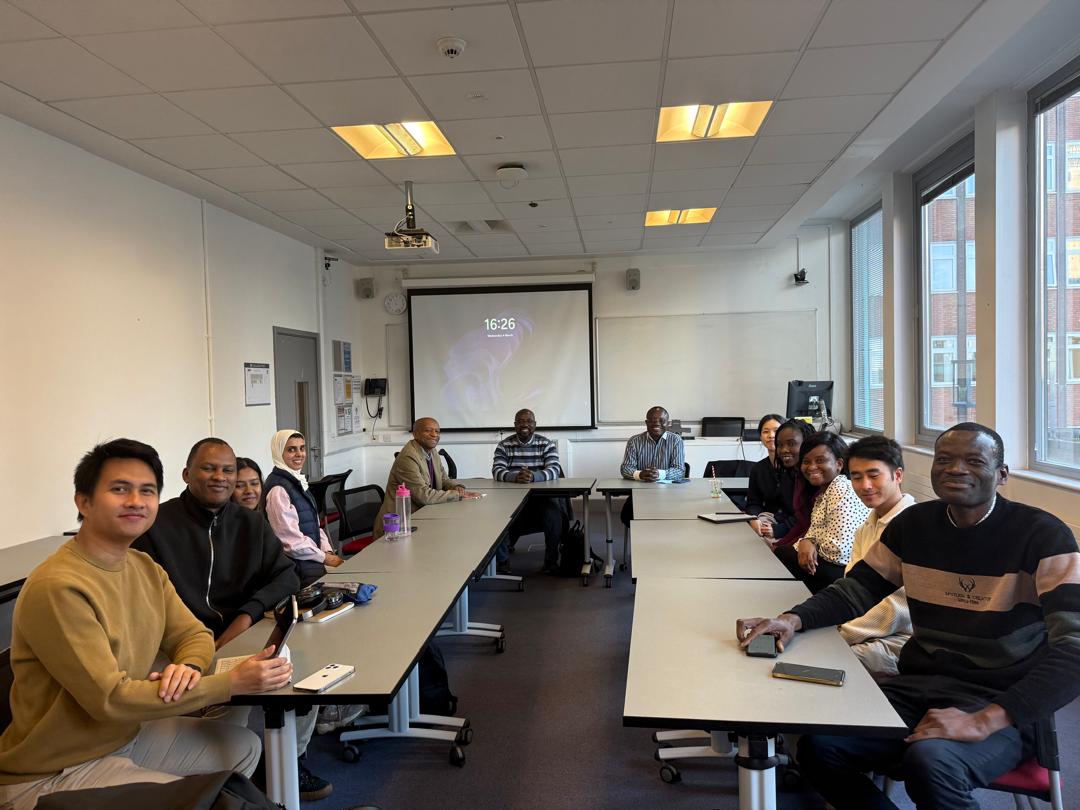
UGBS Dean and Faculty Engage University of Manchester PhD Students During a Collaborative Visit to the UK
The Dean of the University of Ghana Business School (UGBS), Prof. Ernest Yaw Tweneboah-Koduah, together with Prof. Gordon Abeka Nkrumah- Director for Institutional Advancement Directorate, engaged PhD students at the University of Manchester on “Employability for PhD Students” on 5th March 2026, as part of a week-long institutional collaboration visit to the Manchester University. The University of Ghana delegation included senior academics such as Prof. Robert Darko Osei-Director ISSER, Prof. Peter Quartey-Immediate Past Director of ISSER and currently Ag. Director LECIAD and Dr. Andrews Agyei-Holmes-PhD Cordinator, ISSER.
The interactions took place between 2nd March and 9th March 2026 and involved a delegation from the University of Ghana Business School and the Institute of Statistical Social and Economic Research (ISSER). It was hosted by the Global Development Institute (GDI) and formed part of an ongoing partnership between the University of Ghana and the University of Manchester under the UKRI International Science Partnerships Fund. The delegation participated in research workshops, and a discussion on the formation of an African Development Group involving multiple partner institutions. These engagements were aimed at expanding research networks and fostering long-term institutional cooperation.
The employability session was held at the School of Environment, Education and Development (SEED). It was one of the key highlights of the visit and formed part of a broader schedule of academic and research-focused engagements involving faculty from both institutions. Earlier discussions during the visit centred on strengthening collaboration through a proposed Dual PhD Award programme between the University of Ghana and the University of Manchester. Meetings with GDI staff and partners focused on outlining the aims and objectives of the partnership, including support for the next generation of Ghanaian researchers, deepening joint research collaborations, and enhancing co-supervision arrangements.
Other discussions during the engagements included key academic and operational considerations such as admissions processes, student progression, examination structures, and the balance between institutional alignment and administrative requirements. Deliberations further explored approaches to attracting students to priority research areas, as well as issues relating to programme accessibility, fees, and stipends.