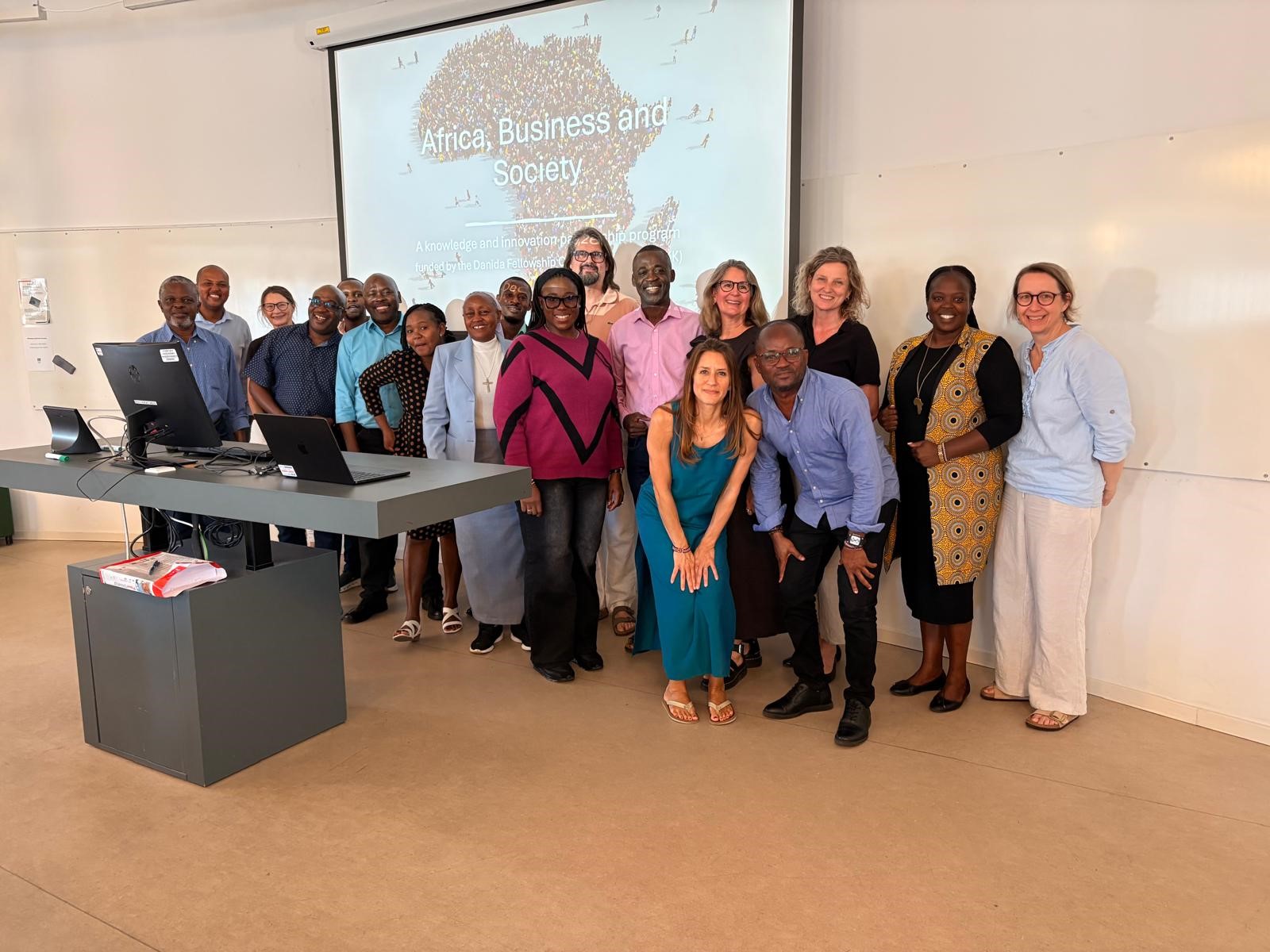
UGBS Team Participates in Africa, Business and Society Project Workshop at Copenhagen Business School
The University of Ghana Business School (UGBS) participated in the Africa, Business and Society (ABS) Kick-off Annual Workshop held from 26th to 29th May 2026 at Copenhagen Business School (CBS), Denmark. The project team comprised Prof. Mohammed-Aminu Sanda- Project Manager/Principal Investigator; Prof. Obi Berko Damoah- Principal Investigator, Prof. Sheena Lovia Boateng- Principal Investigator, and Mr. Mohammed-Nuru Sallama- Project Assistant/PhD Research Student. The objectives of the workshop included the official launch of the ABS project, reviewing experiences from the initial student recruitment and scholarship processes, developing frameworks for student and faculty exchanges among partner institutions, identifying collaborative research opportunities and thematic areas of interest, exploring possibilities for curriculum development and teaching collaboration, and establishing implementation plans, timelines and responsibilities for project activities. The workshop brought together representatives from Copenhagen Business School, the University of Ghana (UG), the University of Nairobi (UoN) and the University of Johannesburg (UJ) to strengthen partnerships and establish a shared vision for achieving the objectives of the project.
The first day of the workshop focused on the official project introduction and discussions on student exchange. The workshop commenced with introductory activities led by Prof. Lindsay Whitfield, where participants were asked to identify their favourite academic book, research areas and one person, dead or alive, they would have lunch with. This was followed by a presentation on the Business and Global South Master's programme at Copenhagen Business School by Prof. Stefano Ponte. Prof. Stefano discussed the individual courses and how they would be structured. He also mentioned three departments from CBS that would be involved in the project. Prof. Stefano further noted that although CBS is internationalised, it is very Northern-oriented and indicated that the project presented an opportunity for students from partner institutions to study at CBS while enabling CBS students to gain knowledge about business in the Global South.
Subsequent discussions focused on student recruitment and scholarship administration. A major concern raised across the three partner universities was the tight deadline for the previous admission process. Prof. Sheena Lovia Boateng also raised concerns about the strict academic requirement of a first-class classification, the TOEFL requirement and the limited recruitment pool resulting from the requirement for accredited courses. Prof. Thando Vilakazi of the University of Johannesburg also mentioned the issue of the timing of students' graduation and the admission window not aligning, resulting in some students having commitments elsewhere by the time admission opens. In proposing improvements for future recruitment cycles, Prof. Thando suggested exploring ways to capture two- to three-year alumni, as they represent a large pool for recruitment. Prof. Sheena also suggested that the strict first-class academic requirement be reconsidered to include students with a GPA of 3.50 and above. Discussions on criteria for future student intakes, led by Prof. Lisa Richey of CBS, acknowledged the issue of the limited application period. She noted that this was something that could not be changed. The official application window to CBS is from 15th December to 15th January each year, with the deadline for conditional acceptance being 31 August. Prof. Lisa also acknowledged the need for more pre-approved courses.
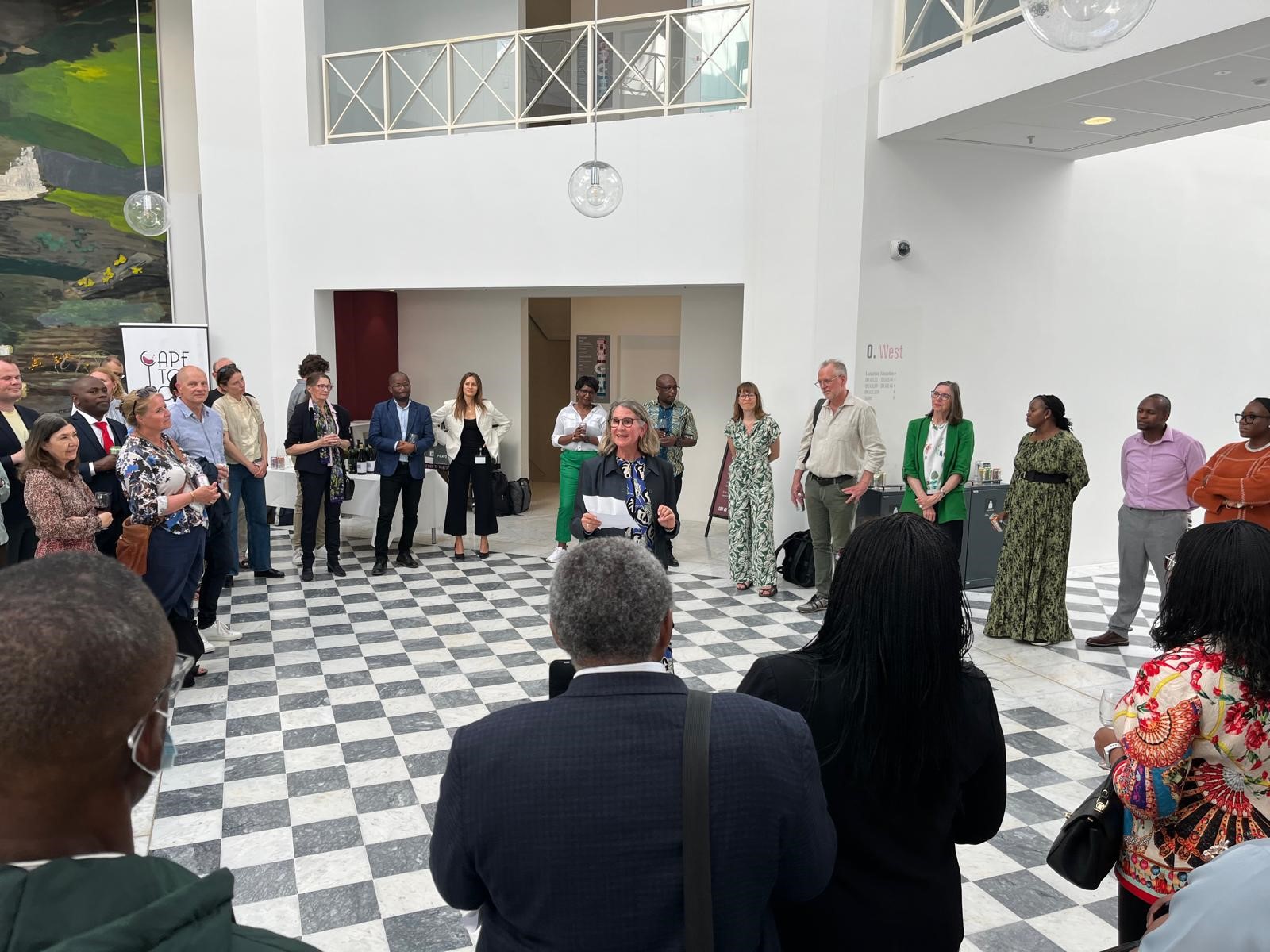
Participants delivering their addresses at the project launch.
Attention was also directed towards practical support systems for students participating in exchange programmes, including pre-arrival preparations and mechanisms for enhancing students' academic and social integration. Ms. Berit Okholm, CBS International Programmes Manager, discussed student onboarding and how to make the process smooth for students. She highlighted the need for applicants to pass the language test examinations before applying to the programme. She also indicated that accommodation would be directly paid for, with all students housed in one building. Ms. Okholm further indicated that student mentors would be provided to help guide new students. Discussions also covered postgraduate trainee programmes, possibilities for pursuing PhD studies at the home institution and the possibility of students working while on the scholarship. It was established that students under the scholarship scheme would not be allowed to work. The participants also discussed multiple-entry visa requirements to enable students to visit their home countries during the programme.
The partner institutions also discussed possible pre-arrival preparations for students. Prof. Thando proposed that home universities provide an academic package, including books and essays, to prepare students for their studies. He also highlighted the need for a mentor who had experienced Scandinavian life to guide students before their arrival. Prof. Sheena emphasised the need for orientation on the European Credit Transfer and Accumulation System (ECTS) and the education system in general. She also mentioned the importance of providing information on visa requirements and residence permits, as well as education on spending and budgeting. Participants also noted the need to prepare students for changes in weather conditions. The day concluded with the formal launch of the ABS project by the Pro Vice-Chancellor of CBS, Prof. Inger Ashkave. Prof. Inger highlighted the significance of the partnership in strengthening collaboration among the partner institutions and advancing research and teaching on business and society issues within African contexts. The launch was attended by Her Excellency Dr. Margaret Miewien Chebere, Ghana's Ambassador to Denmark, Sweden and Finland, as well as Dr. Fikile Sylvia Magubane, South Africa's Ambassador to Denmark and Dean of the Diplomatic Corps in Denmark.
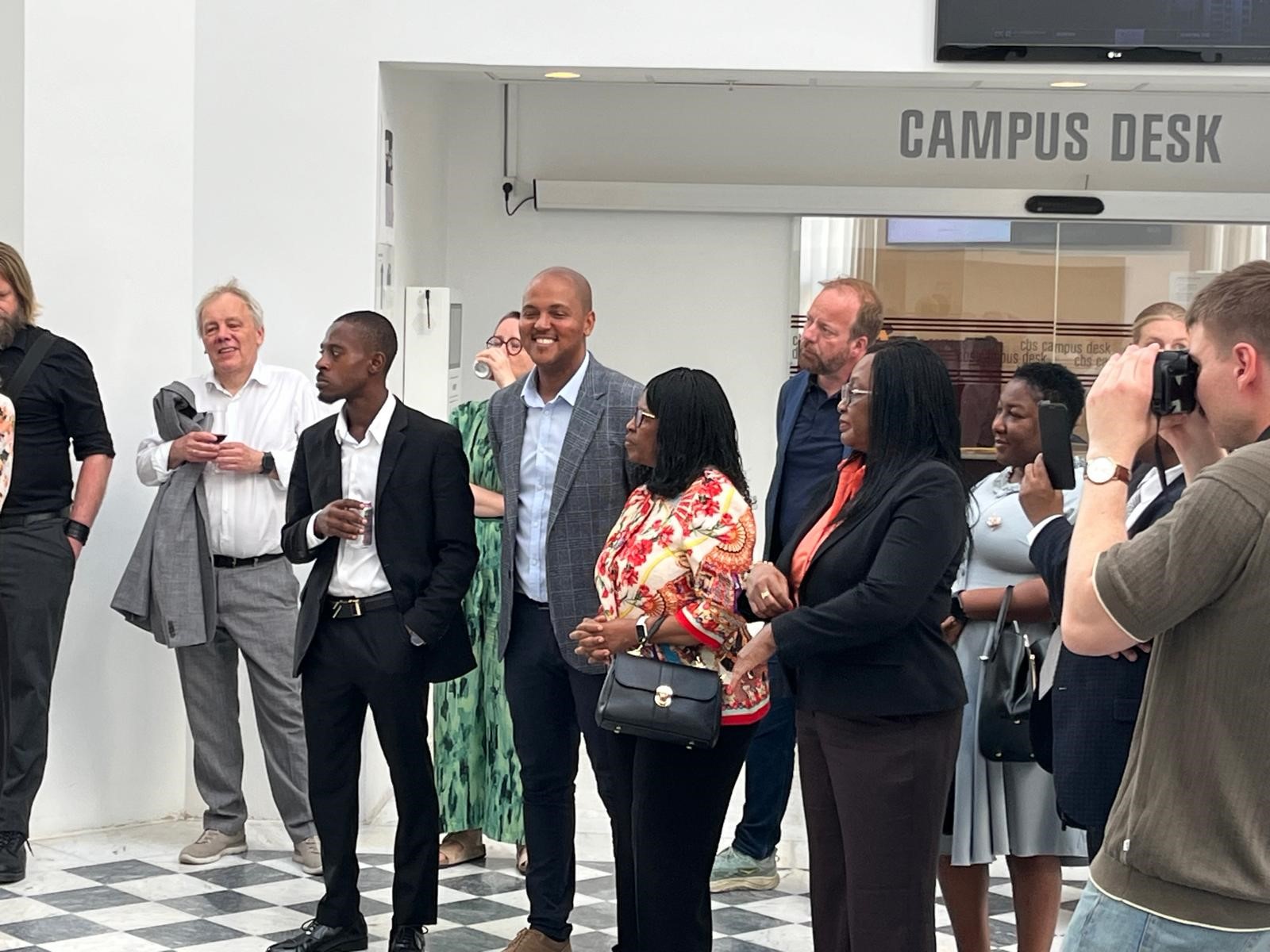
Ambassador Chebere (Ghana) and: Ambassador Magubane (South Africa) at the project launch.
The second day of the workshop focused primarily on research collaboration and faculty exchange initiatives. Discussions were led by Prof. Lindsay Whitfield and involved brainstorming sessions aimed at identifying common research interests among participants. Participants worked in smaller groups to explore thematic research areas, define potential collaborative projects and identify activities that could be undertaken under the ABS framework. The sessions also explored mechanisms for linking research activities with faculty exchange programmes and ensuring that project deliverables align with the broader objectives of the ABS initiative. The day concluded with a synthesis of proposed research activities, timelines and implementation strategies.
The third day focused on academic programmes and opportunities for collaborative teaching among the partner institutions. Representatives from UGBS, the University of Nairobi and the University of Johannesburg presented relevant master's programmes and discussed areas where curriculum development and pedagogical collaboration could be pursued. Prof. Abdul-Gafaru Abdulai of UGBS, made an online presentation of five relevant courses from three master's programmes that could be taught as part of the exchange activities by partner universities. The courses included Development Politics, Business Ethics and Corporate Responsibility, and Corporate Strategy and Governance. Similarly, Prof. Paul Kamau of the University of Nairobi presented four courses under two master's programmes. The courses were Value Chains Innovation, Creativity and Innovation Management, Development Economics and History of Economic Thought.
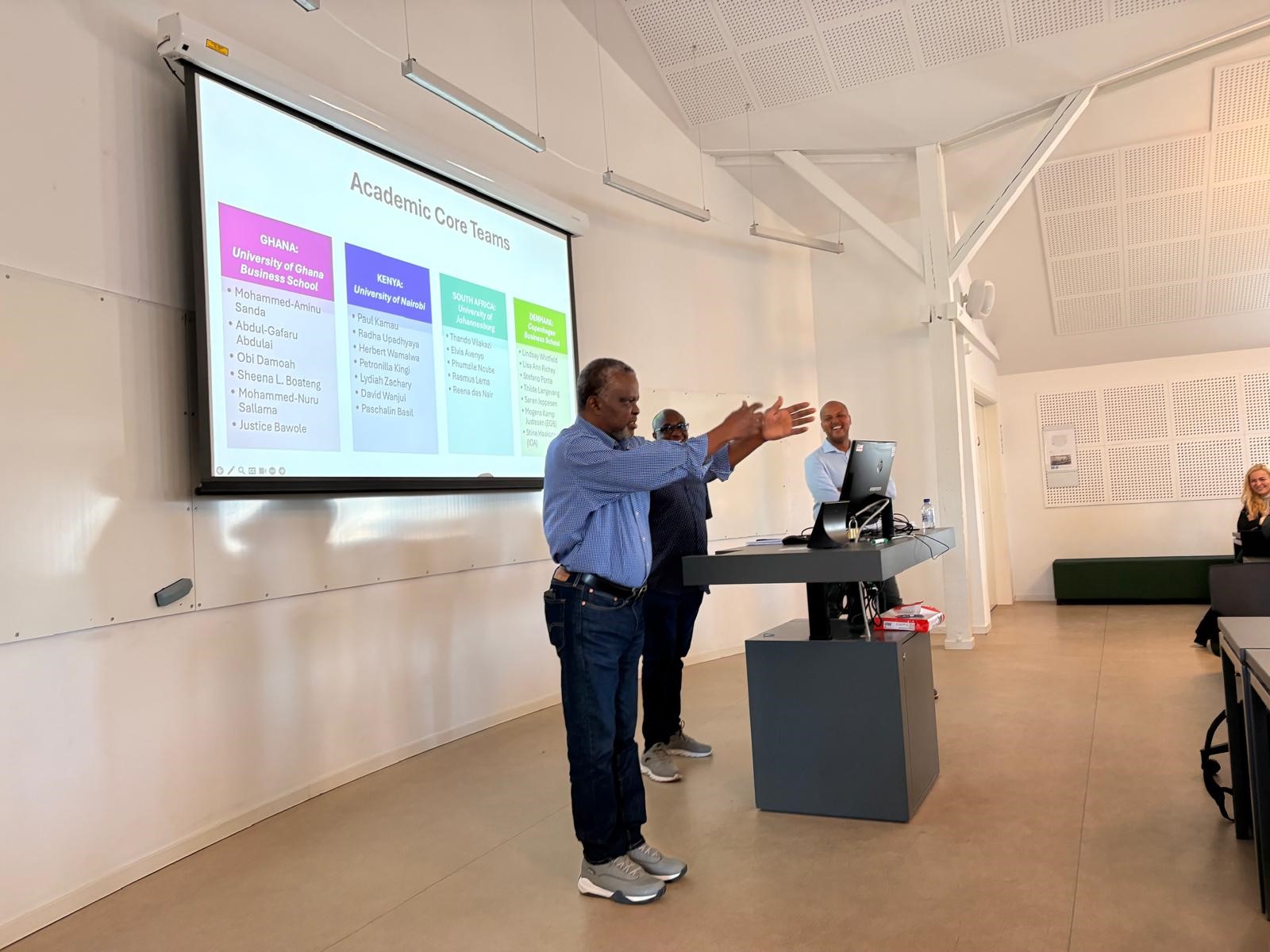
Presentation by Prof. Sanda from UGBS
Prof. Thando Vilakazi of the University of Johannesburg presented two courses under one master's programme: Political Economy of Development and Trade, and Industrial and Competition Policy. Dr. Stine Haakonsson of CBS also presented the courses and explained how teaching on the Business and Global South programme would be handled at CBS. Further discussions examined faculty mobility opportunities and potential teaching exchanges across the institutions. Presentations highlighted existing courses and explored possibilities for co-teaching, curriculum enhancement and the development of shared learning resources. Emphasis was placed on strengthening educational offerings related to business and society studies and promoting greater cross-fertilisation of ideas among the participating institutions.
The final day concentrated on implementation planning and future project activities. Participants discussed practical arrangements for future student recruitment cycles, including timelines, responsibilities and coordination mechanisms. Faculty exchange schedules and future annual workshops were also discussed and agreed upon, with the next annual workshop scheduled to take place in South Africa. The afternoon session featured a lunch with the Department of Management, Society and Communication (MSC), including presentations and reflections on the broader ABS partnership from Prof. Lindsay Whitfield and Prof. Lisa Richey. The workshop concluded with reflections on key achievements, future priorities and strategies for sustaining collaboration throughout the project's implementation period. The knowledge and networks developed through participation in the ABS Kick-off Annual Workshop are expected to contribute to ongoing research and capacity-building initiatives within UGBS and the wider ABS partnership.
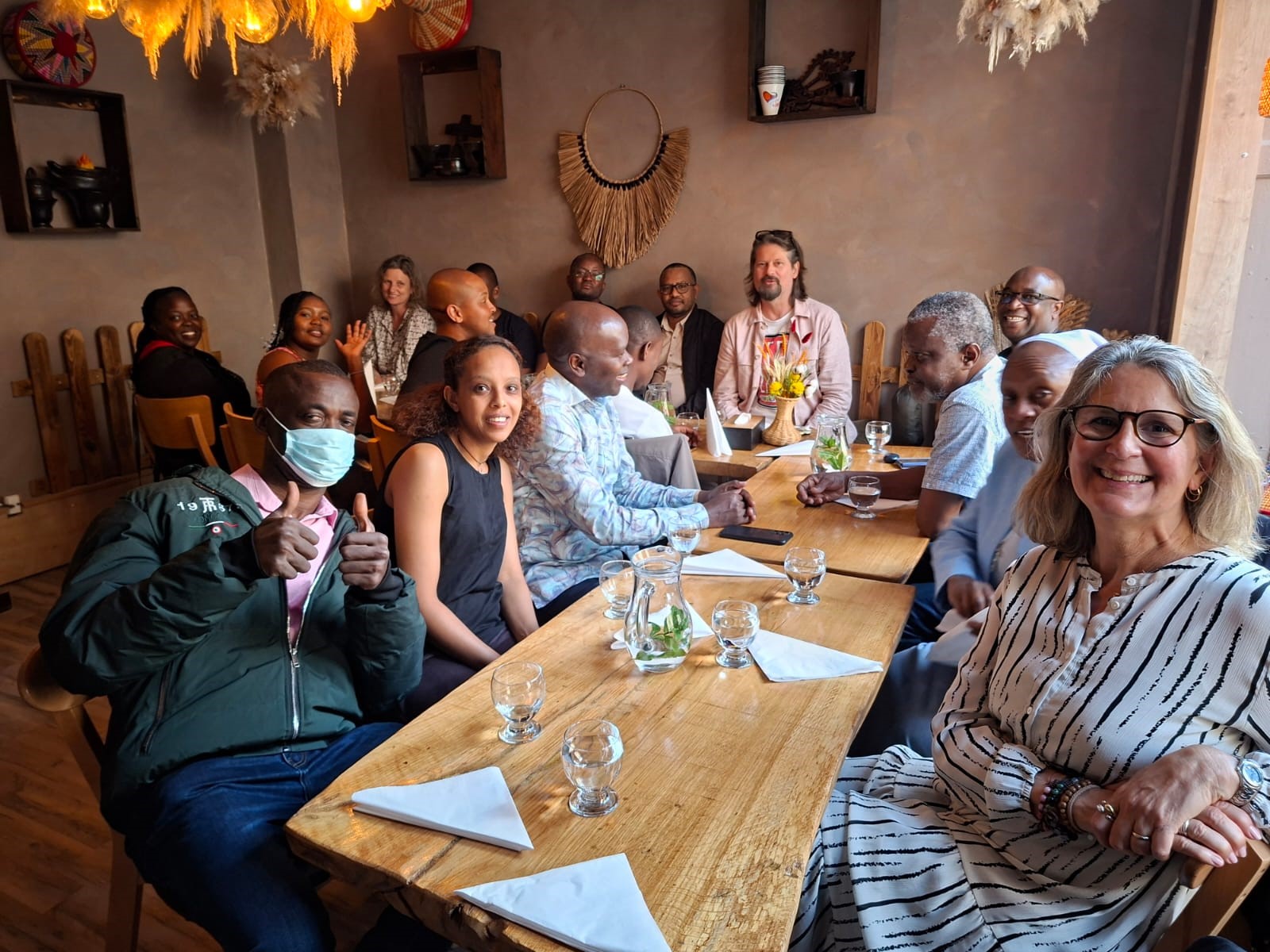
Farewell Gathering.