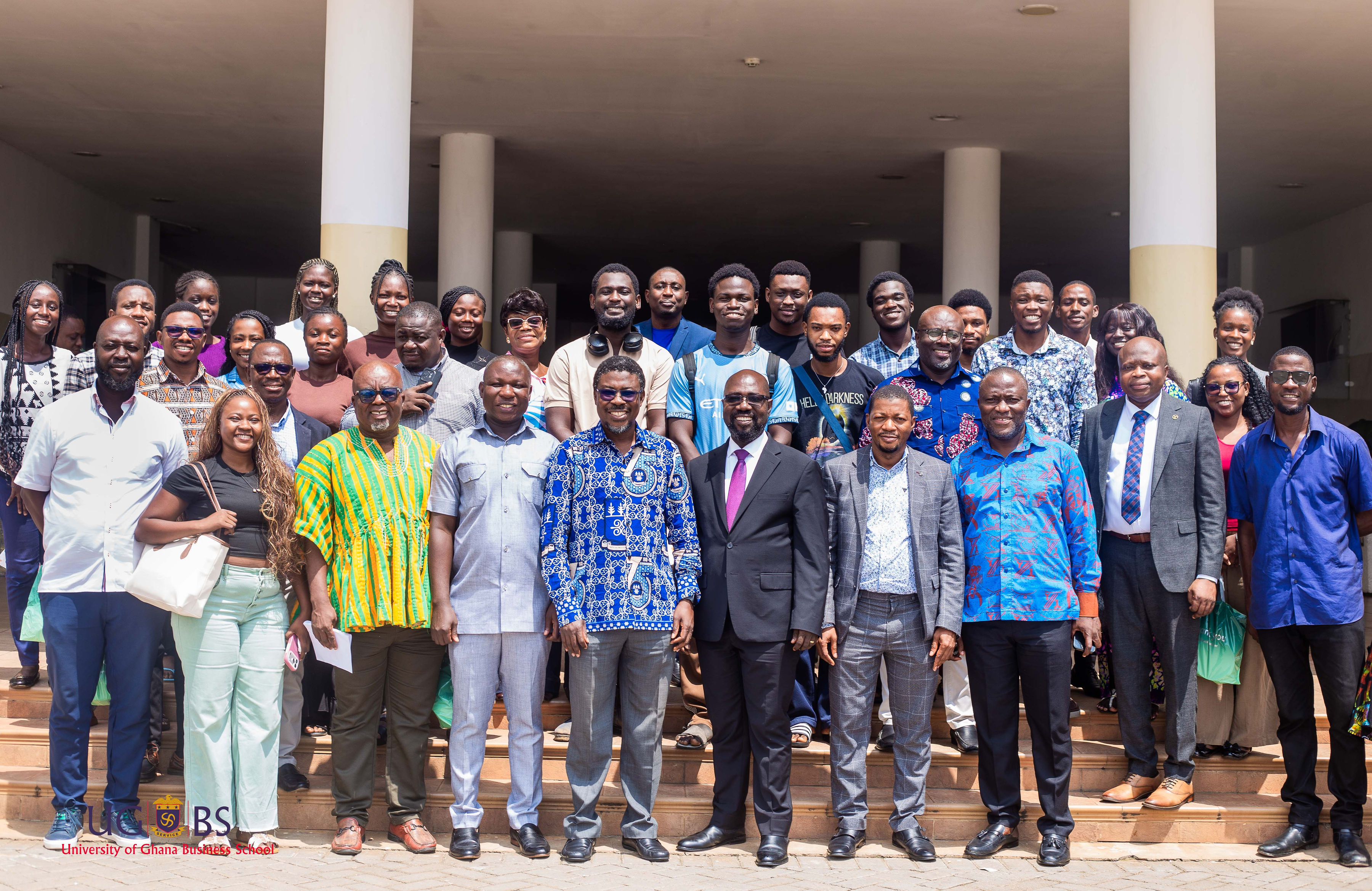
UGBS Commemorates Day of Scientific Renaissance of Africa with Dialogue on Research Funding and Partnerships
The University of Ghana Business School (UGBS) has commemorated the 2026 Day of Scientific Renaissance of Africa (DSRA) with a panel discussion on the theme, “Funding Knowledge Generation for Equitable Development: The Role of Partnerships.” The event was held on 10th June 2026 at the UGBS Graduate Campus, and brought together policymakers, academics, researchers, students, and development practitioners to explore sustainable approaches to financing research and innovation in Africa. Among the dignitaries present were the Dean of UGBS, Prof. Ernest Yaw Tweneboah-Koduah; former Dean of UGBS, Prof. Justice N. Bawole; Director of Institutional Advancement, Prof. Gordon Abeka-Nkrumah; Director of the Centre for Social Policy Studies, Prof. Abdul-Gafaru Abdulai; and former Mayor of Accra, Hon. Mohammed Adjei Sowah. The discussion was moderated by Prof. Albert Ahenkan, Head of the Department of Public Administration, UGBS. Introducing the purpose of the gathering, Mr. Yaw Tsen Yeboah, Assistant Registrar HR at UGBS explained that the Day of Scientific Renaissance of Africa is commemorated annually by the University of Ghana and its constituent departments, including UGBS, to celebrate the role of science, technology, and innovation in advancing Africa’s development.
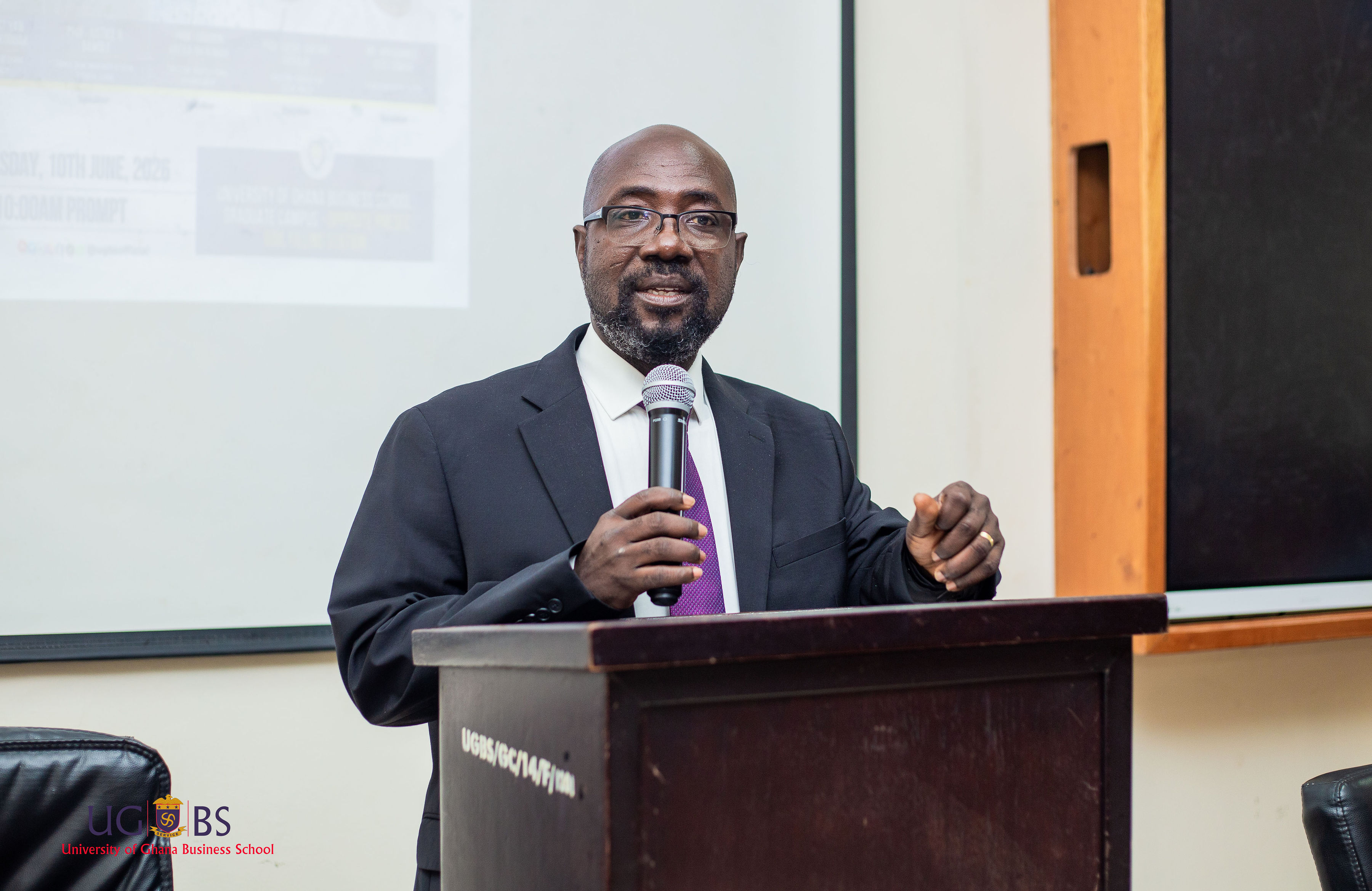
Dean of UGBS, Prof. Ernest Y. Tweneboah- Koduah
Delivering the opening remarks, Prof. Ernest Tweneboah-Koduah, explained that research and innovation are important to economic growth, social progress, and sustainable development. He noted that although Africa possesses significant intellectual potential, many research institutions continue to face challenges such as inadequate funding, limited infrastructure, and insufficient capacity to sustain impactful research. “The next generation of research and innovations are central to economic growth, social progress and sustainable development,” he stated. “Our focus should not only be on increasing research funding, but also on ensuring that such investment promotes equitable development. We must consider whose knowledge is valued and how partnerships can support mutual benefit rather than dependence.”
According to him, African institutions must be empowered to lead research that responds to local realities and development needs. He stressed that addressing challenges such as climate change, youth unemployment, public health concerns, and economic transformation requires stronger investment in research as well as collaboration among universities, governments, industries, civil society organisations, philanthropic institutions, and employers. “Partnerships must be built on equity, trust, mutual respect and shared ownership,” he added, encouraging participants, particularly students and early-career researchers, to contribute actively to discussions on innovative financing mechanisms, stronger industry collaboration, and equitable international partnerships. He said.
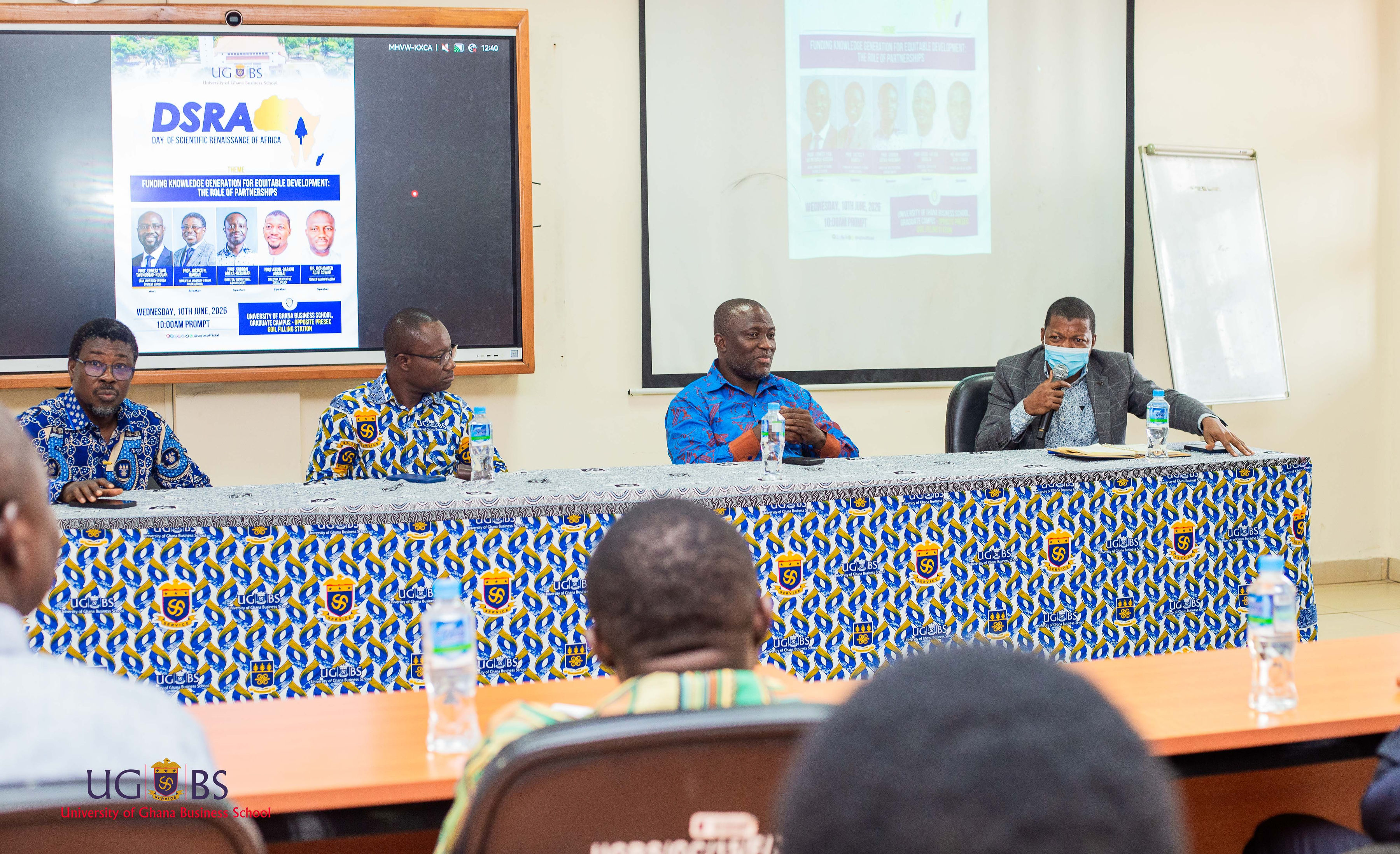
Speakers for the UGBS 2026 DSRA
The panel discussion commenced with Prof. Abdul-Gafaru Abdulai, who examined existing research funding models and the limitations associated with them. He explained that many research projects are supported through short-term funding arrangements, often causing investigations to end when funding cycles expire. He further noted that funding from external institutions frequently reflects donor priorities and global development trends rather than local needs. Prof. Abdulai argued that these realities can limit the relevance and impact of research outcomes. He also questioned why multinational companies often invest heavily in research and development in their home countries while making substantial profits elsewhere, including in Africa. To address this imbalance, he advocated policies that would encourage greater local investment in research and innovation. Speaking directly to early-career researchers, he advised them to build strong professional networks and partnerships, remain resilient in the face of proposal rejections, and maintain integrity and trustworthiness to attract funding opportunities.
Hon. Mohammed Adjei Sowah, focused on the role government can play in supporting research funding. He commended UGBS for creating a platform that bring together researchers and policymakers and emphasised the need for stronger collaboration between academia and government. “There should be a relationship between academia and policymakers so that it becomes easier to identify gaps and secure funding,” he said. Hon. Adjei Sowah explained that effective policymaking must be informed by credible data and evidence, much of which is generated by researchers. He encouraged academics to communicate their findings more effectively and to engage policymakers in meaningful conversations that demonstrate the value of investing in research.
According to him, there are funding opportunities available within the country, but researchers must adopt stronger approaches in seeking support by clearly demonstrating the benefits of their work to citizens and national development. He also observed that businesses rarely invest in research and development due to the absence of incentives and called for policies that would motivate private sector participation. Additionally, he urged researchers to make their proposals more accessible and understandable to policymakers.
Prof. Gordon Abeka-Nkrumah shared some innovative approaches to supporting research and knowledge generation. He encouraged researchers and universities to align their work with the research and development priorities of institutions and industries, identify areas of mutual interest, and build structures that facilitate collaboration. He also proposed engaging private individuals and philanthropists who may be willing to support indigenous research initiatives. According to him, many of Africa’s challenges require long-term research efforts and, therefore, long-term funding commitments are relevant. Prof. Abeka-Nkrumah expressed concern about the continent’s low investment in research compared to other parts of the world, noting that decision-makers often do not give adequate attention to the issue. He said that evidence remains the most effective tool for addressing present and future development challenges and encouraged researchers to study successful international models that have influenced policymakers to prioritise research and development. He further urged policymakers to translate research evidence into actionable policies and explained the need to sustain knowledge generation in ways that lead to equitable development outcomes.
Prof. Justice N. Bawole, examined the relationship between research priorities, industry needs, and development outcomes. He stressed that universities must actively demonstrate the value of research to the business community and create greater awareness of how investments in research contribute to innovation and growth. “Universities must put research evidence out there for government and individuals to see and understand why they should invest. Otherwise, they may never see its relevance,” he noted. Prof. Bawole advocated the creation of more institutional data platforms and repositories that can serve as valuable resources for government agencies, businesses, and development partners. Such initiatives, he explained, would strengthen relationships between universities, policymakers, and investors. He also encouraged stronger partnerships between African universities and funding institutions to ensure that local researchers move beyond data collection roles to lead research that contributes meaningfully to Africa’s development.
He also called on government to reduce the teaching workload of lecturers to enable them to dedicate more time to research activities. In his view, increased public investment in research would encourage greater participation by practitioners and policymakers while signalling the importance of evidence-based decision-making. Addressing the role of multinational corporations, Prof. Bawole suggested that greater attention should be paid to the profits generated by global businesses operating in Africa, arguing that such companies should be encouraged to invest more substantially in African research and development efforts rather than focusing their corporate social responsibility initiatives elsewhere. He further expressed concern about the migration of talented young Africans to other continents due to limited opportunities and inadequate investment in their skills. Universities, he said, must take a leading role in addressing this challenge. The event concluded with an interactive question-and-answer session, providing participants the opportunity to engage the panellists on issues relating to research funding, partnership development, policy influence, and the future of knowledge generation in Africa.