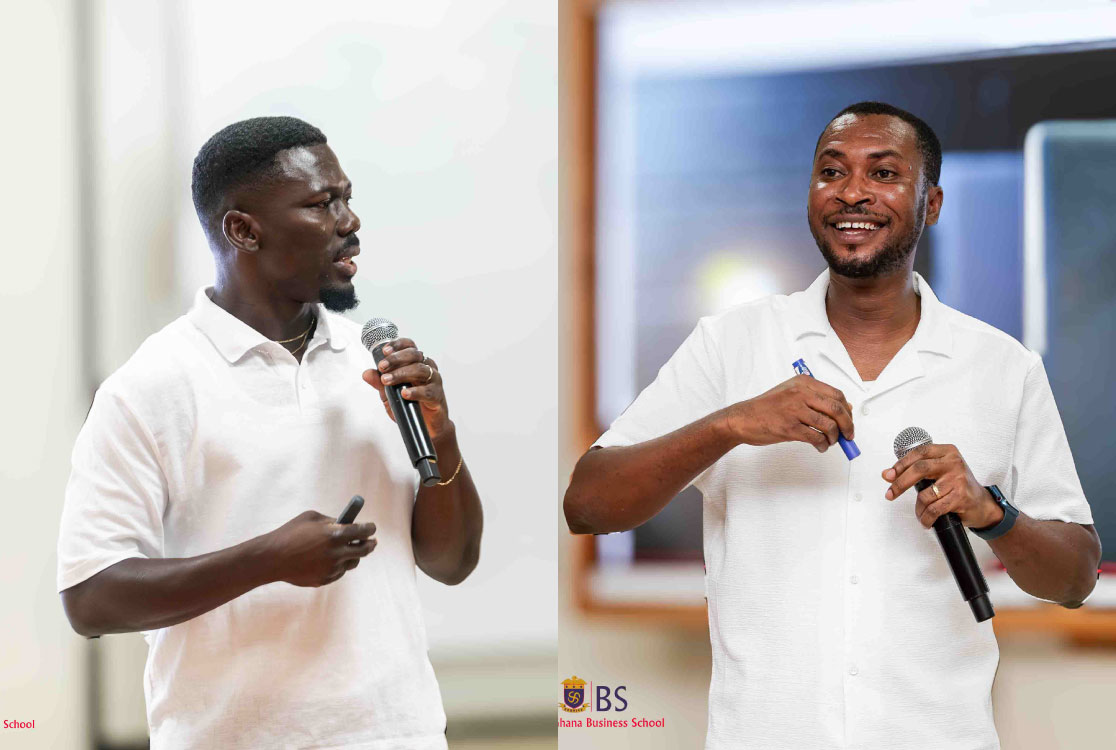
PhD Programmes Unit Hold a Two-Day Research Workshop
The PhD Programmes Unit of the University of Ghana Business School (UGBS) organised another session of its PhD Seminar and Workshop from 8th to 9th January 2026 at the UGBS Graduate Building. The two-day programme was attended by both MPhil and PhD candidates from UGBS and other universities within and outside Ghana. This forms part of ongoing efforts to strengthen research capacity and scholarly output among doctoral students.
Welcoming participants, the Coordinator of the UGBS PhD Programmes Unit, Dr. Emmanuel Joel Aikins Abakah, highlighted the Unit’s commitment to supporting the PhD community through a series of upcoming seminars and capacity-building activities. He encouraged participants to take advantage of such platforms and explained the importance of publishing literature reviews as a critical step in their doctoral journey.
The first day of the seminar featured a session led by Dr. Albert Amankwaa from the University of Tasmania, Australia. His presentation was titled, “Mastering Systematic Reviews with Covidence and VOSviewer: Strategies for High-Quality, Publishable Research.” He focused on enhancing participants’ understanding and application of systematic review methodologies.
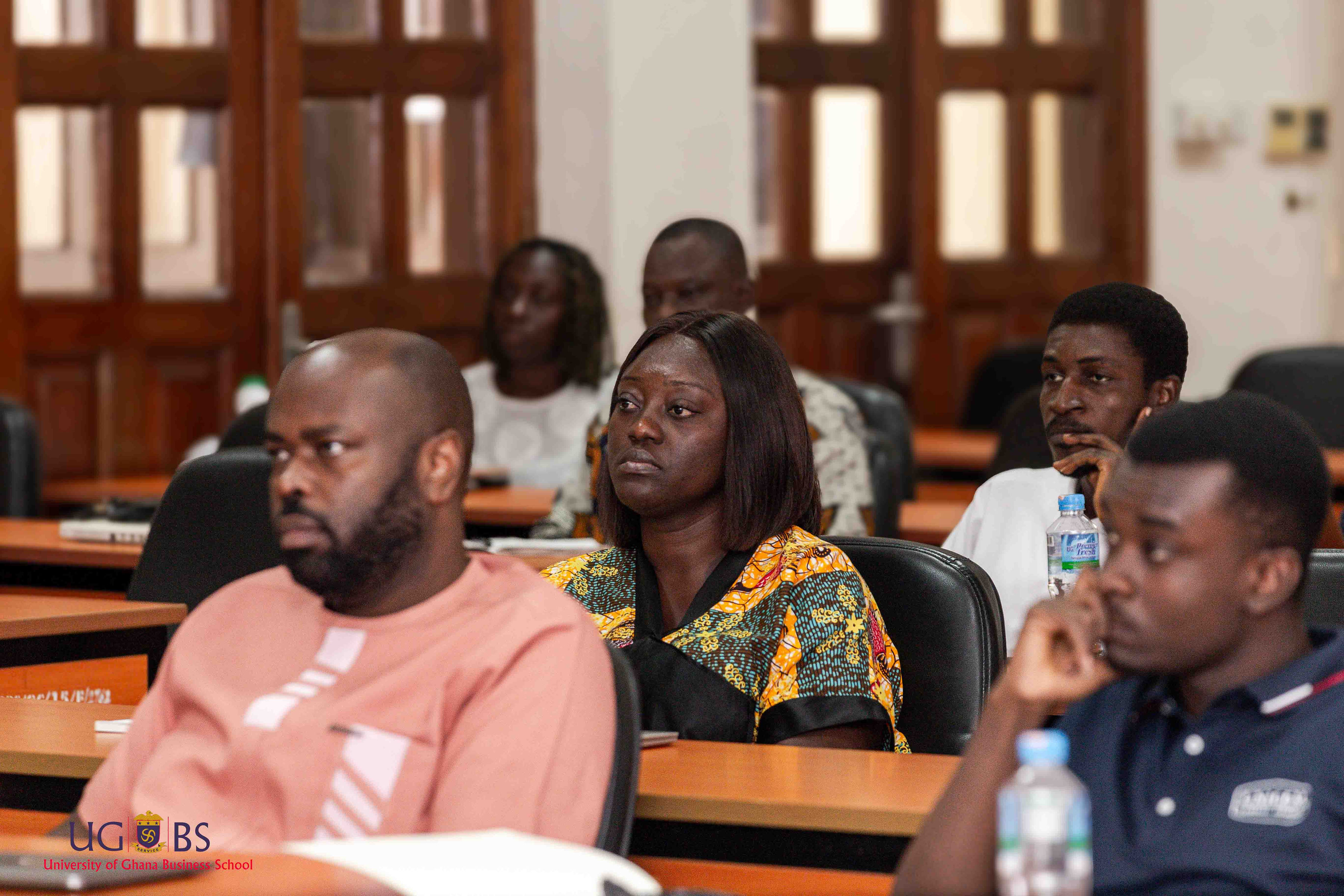
Students at the Workshop
Dr. Amankwaa explained that systematic reviews play a critical role in addressing implicit bias and overcoming challenges commonly associated with narrative literature reviews, including lack of rigour, inadequate critical assessment and infrastructural limitations. He introduced participants to emerging review approaches, such as bibliometric reviews, noting that they go beyond merely reporting outputs from VOSviewer by offering more descriptive and analytical insights.
Using a recent paper titled “Mistreatment at Work: Interventions!”, Dr. Amankwaa illustrated key concepts focusing on systematic and bibliometric reviews. The session included a hands-on practical component, during which participants were taken through bibliometric analysis using VOSviewer. He also described Covidence as an online platform designed to support the screening and management of data during systematic reviews.
The interactive session allowed participants to ask questions and actively engage in analysing the study content, from topic discovery through to final recommendations. Dr. Amankwaa emphasised that consistent practice is essential for improving research skills and encouraged participants to regularly apply the tools and techniques discussed. He further shared practical insights on conducting systematic reviews and offered guidance on publishing in top-tier international journals.
Day two of the workshop continued with a session on “Mastering Qualitative Research Analysis: Tools, Techniques and Best Practices,” facilitated by Dr. Emmanuel Senior Tenakwah from Charles Darwin University, Australia. His presentation focused on equipping participants with practical skills for qualitative research analysis.
Dr. Tenakwah guided participants through the key stages of qualitative analysis, including data evaluation, systematic coding techniques and common warning signs to watch for during the research process. Participants were also engaged in discussions around the challenges they face in their qualitative analysis journey, with Dr. Tenakwah sharing common approaches to addressing these challenges.
The session further explored and compared various qualitative methodologies, including thematic analysis, content analysis, grounded theory, framework analysis, narrative analysis and interpretative phenomenological analysis. Dr. Tenakwah explained that coding may be descriptive, in vivo or interpretive, depending on the nature of the data collected. He noted that while existing codes may adequately capture new data, perfect saturation is rare, even when themes appear stable and well-defined.
He therefore encouraged participants to use codes as sub-headings or themes, support their analysis with direct quotes as evidence and clearly explain the significance of their findings. The session concluded with practical discussions, offering participants first-hand experience with relevant tools, techniques and best practices tailored for Higher Degree by Research (HDR) students.
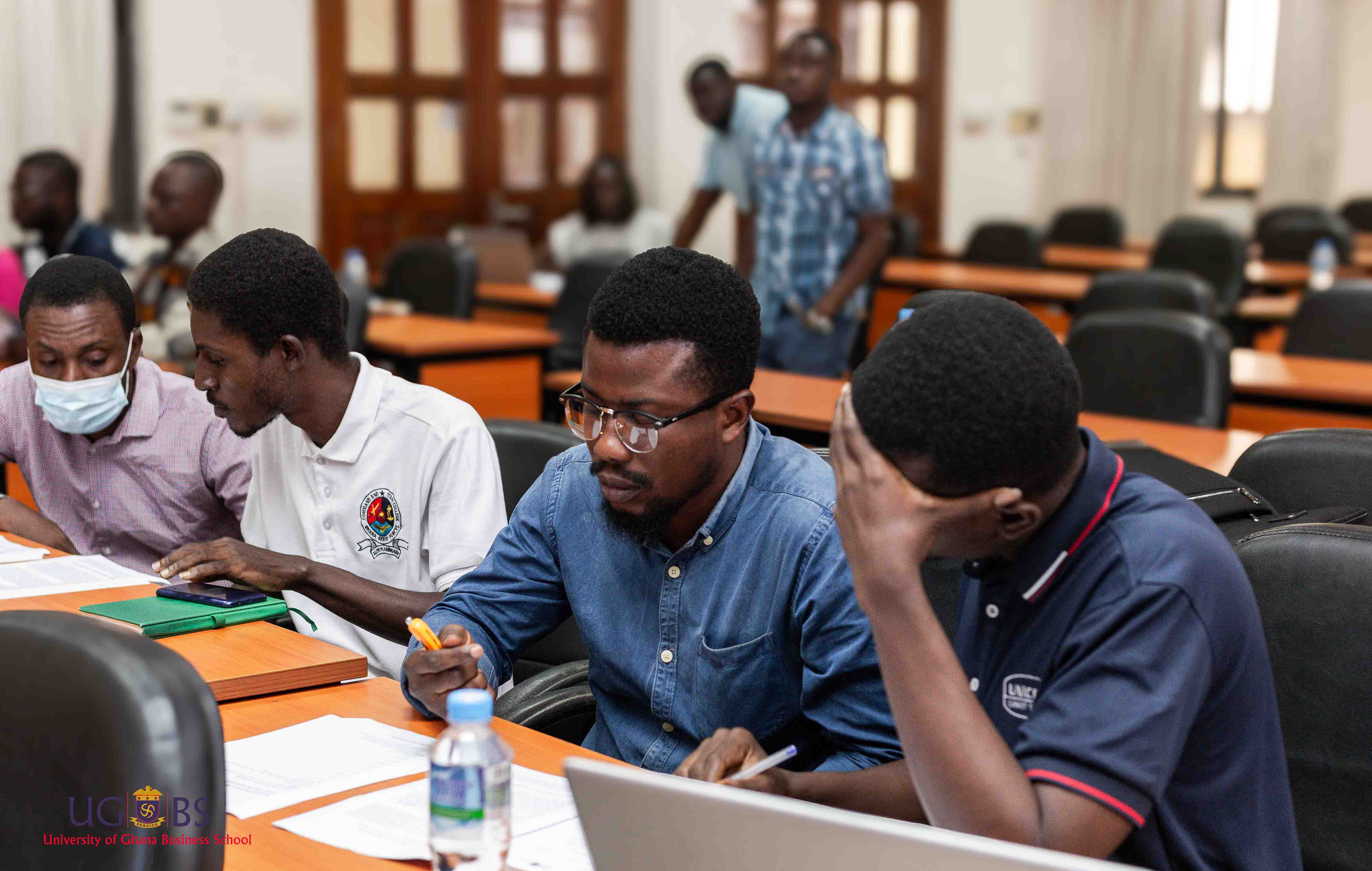
Students at the Workshop