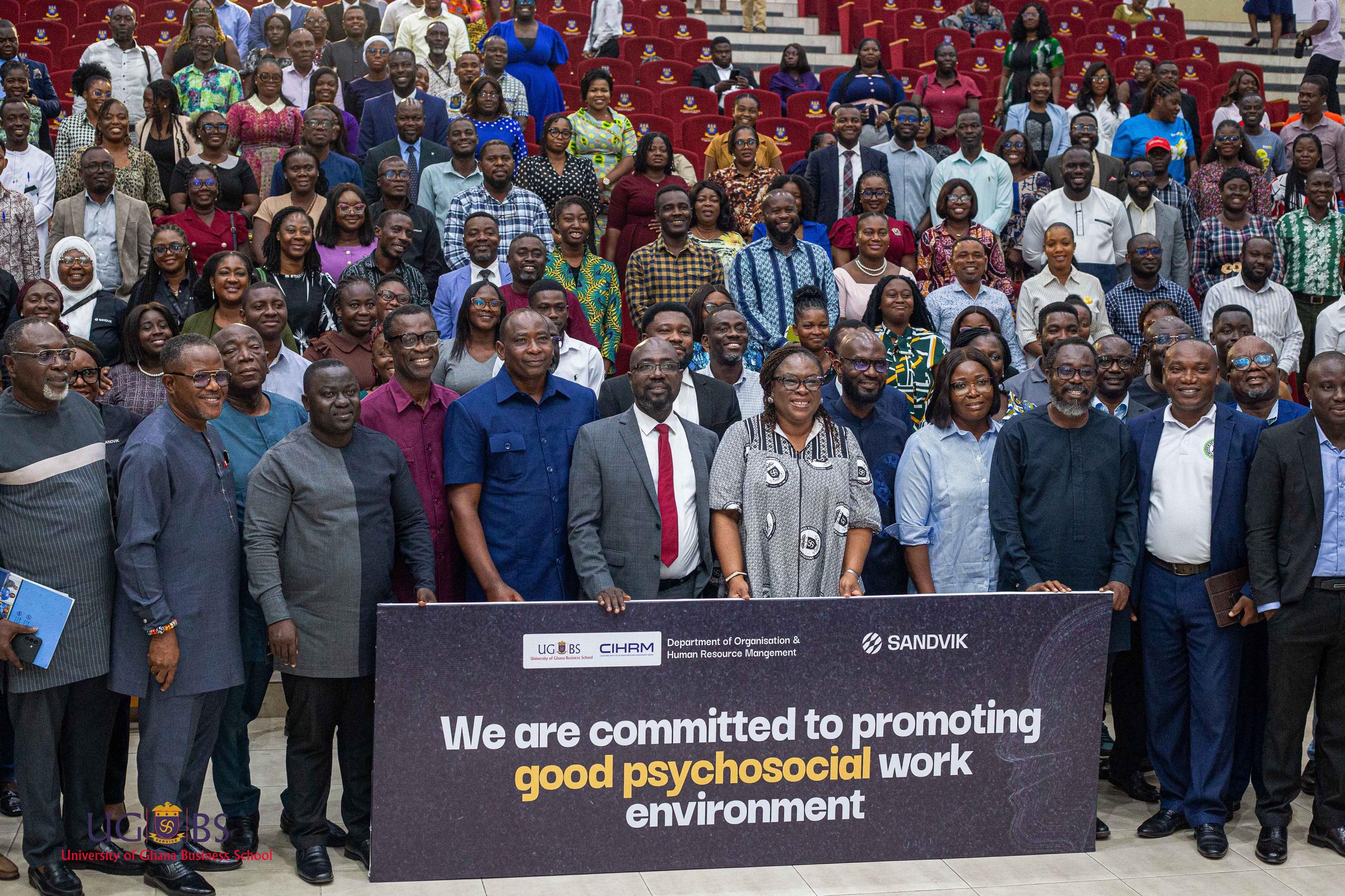
UGBS Department of OHRM in Collaboration with CIHRM Host World Safety Day Conference
The Department of Organisation and Human Resource Management (OHRM) at the University of Ghana Business School (UGBS), in collaboration with the Chartered Institute of Human Resource Management Ghana (CIHRM, Ghana), hosted a conference to mark the 2026 World Day for Safety and Health at Work. Held at the University of Ghana Cedi Conference Centre on 28th April 2026, the conference was on the theme: “Good Psychosocial Working Environment: A Pathway to Thriving Workers and Strong Organisations.” The event was sponsored by Sandvik, with Prof. Sheena Lovia Boateng serving as moderator.
In his opening remarks, the Head of the Department of OHRM, Prof. Damoah Obi Berko, explained that the event aligns with the University of Ghana’s Strategic Plan (2024–2029), particularly its focus on engagement and partnerships as drivers of growth and sustainability. Prof. Berko noted that achieving national and continental development agendas, including Ghana’s long-term development vision and the African Union’s Agenda 2063, requires stronger collaboration between academia, industry, government, and civil society. He emphasised that the Department’s mandate focuses on how work is designed, managed, and experienced, stressing that occupational health and safety must be treated as a central pillar of organisational effectiveness. He further announced that the Department has secured accreditation for a new MSc in Occupational Health and Safety programme, scheduled to commence in the next academic year. The programme, to be delivered through weekend and sandwich options, is designed to equip professionals with practical competencies, and organisations were encouraged to sponsor staff to enrol. He added that the conference marks the beginning of an annual platform for advancing workplace safety discourse, particularly in psychosocial well-being, which he noted has received limited attention in Ghana.
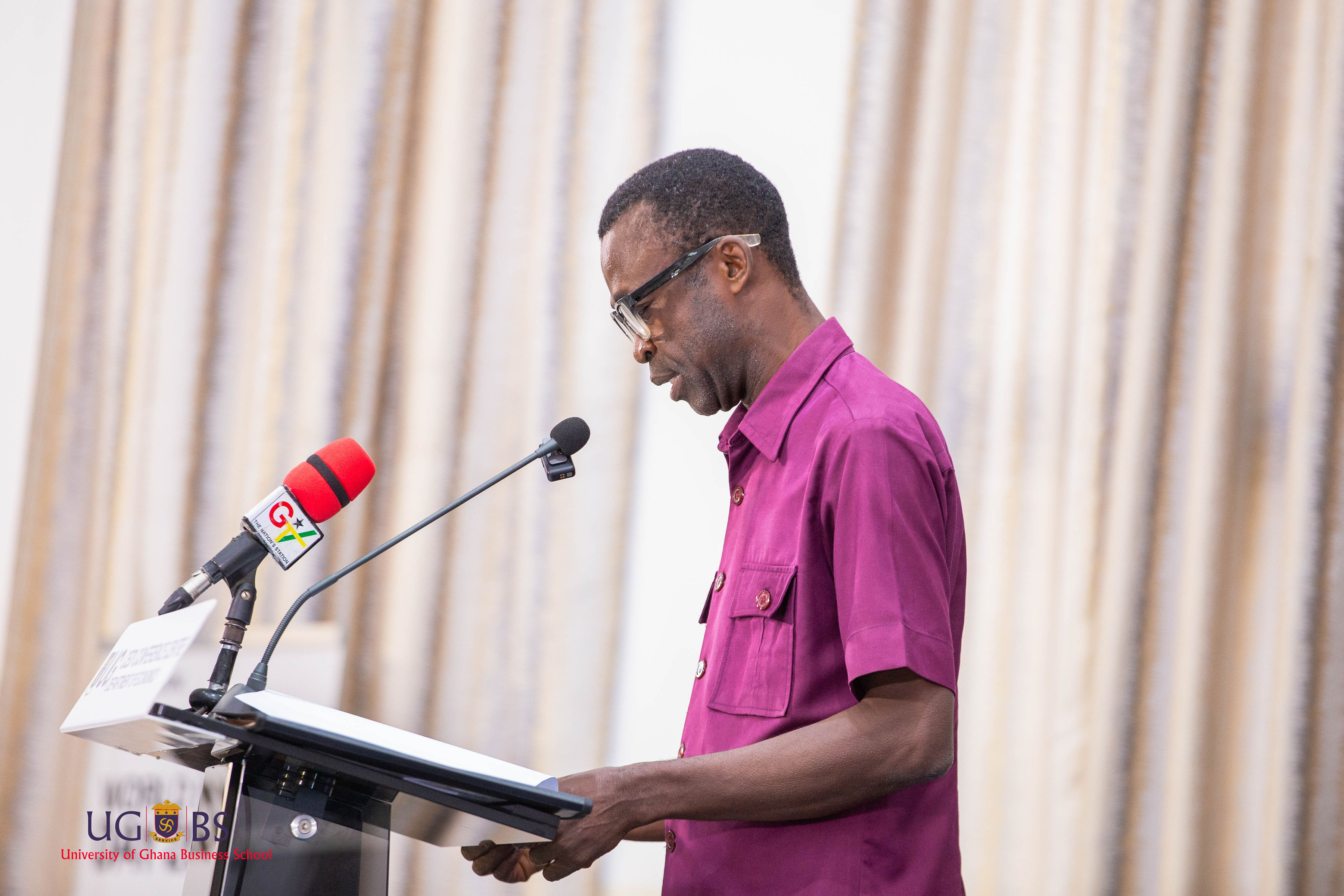
Prof. Damoah Obi Berko giving his opening remarks
Delivering remarks on behalf of the Vice-Chancellor, Prof. Nana Aba Appiah Amfo, the Registrar of the University, Mrs. Emelia Naa Kwantsua Agyei-Mensah, commended the Department for organising the conference. She highlighted the significance of the World Day for Safety and Health at Work and stressed the urgent need for institutions to prioritise employee well-being. She noted that the success of any organisation depends on the well-being of its people, adding that poor mental, emotional, and psychosocial health leads to absenteeism, reduced productivity, and declining institutional performance. Citing global data from the World Health Organization, she underscored the economic cost of mental health challenges and reaffirmed the University’s commitment to promoting a safe and supportive work environment. Mrs. Agyei-Mensah linked employee well-being to the University’s 2024–2029 Strategic Plan, noting that its key pillars including student experience, impactful research, staff engagement, partnerships, and sustainable resource mobilisation depend on the health of its workforce. She called for strengthened capacity among HR professionals to identify and manage psychosocial risks and urged leaders to foster open, supportive workplace cultures.
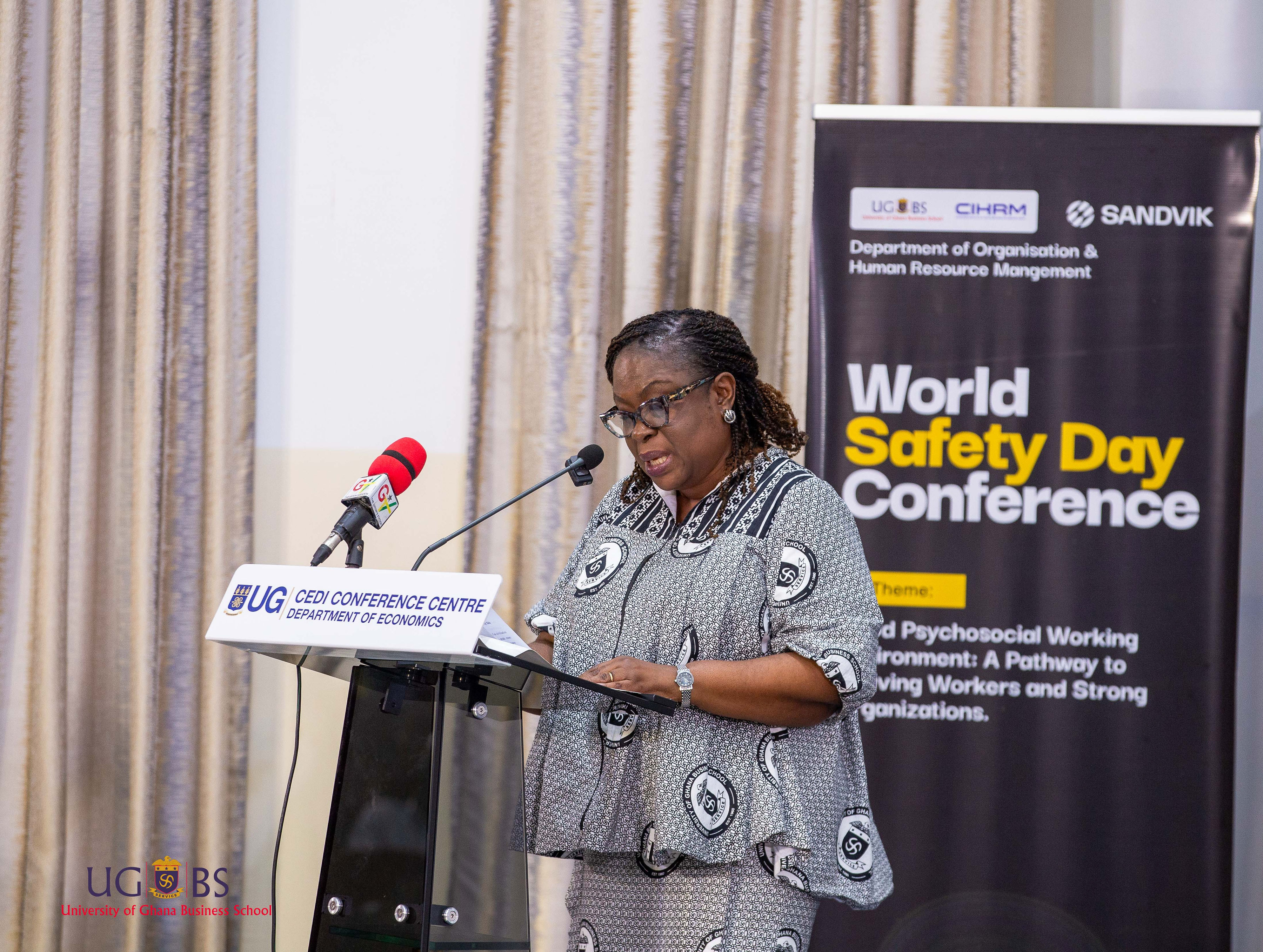
Mrs. Emelia Naa Kwantsua Agyei-Mensah,delivering remarks on behalf of the Vice-Chancellor
The Special Guest, Dr. Abdul-Rashid Hassan Pelpuo, Member of Parliament for Wa Central and Minister for Labour, Jobs and Employment, described the conference as timely and of national importance. He emphasised that occupational safety and health remain a core mandate of the Ministry, noting that while attention has traditionally focused on physical risks, there is an increasing need to address psychosocial hazards such as excessive workload, harassment, job insecurity, poor communication, and unhealthy workplace cultures. He stressed that workers are not machines but human beings whose dignity and well-being are essential to productivity and national development. He further noted that unsafe work environments are often the result of weak systems, poor leadership, and inadequate policies. Dr. Pelpuo explained that workplace safety is a fundamental right and a leadership responsibility, urging organisations to build environments that protect and empower workers while promoting sustainable productivity.
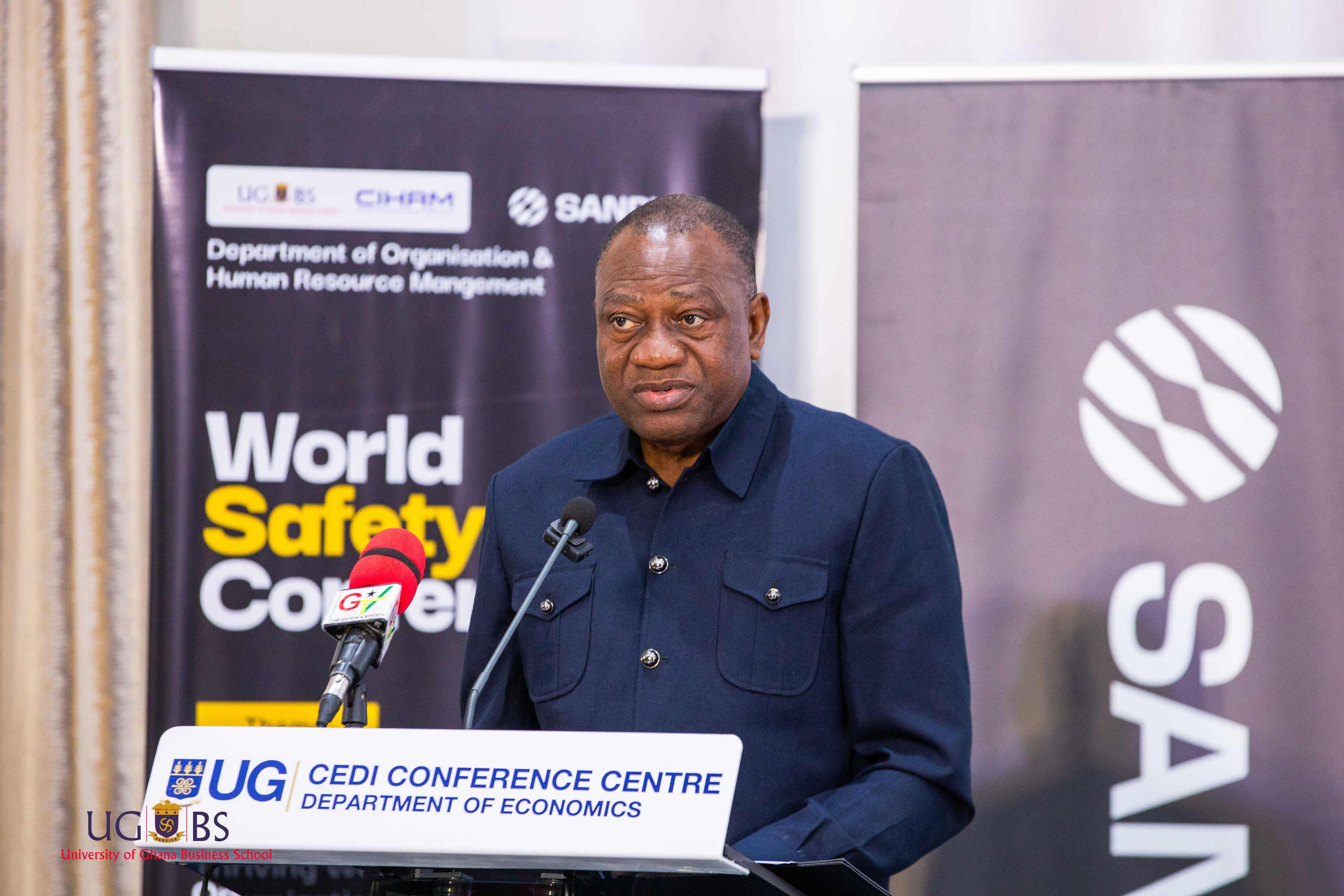
Dr. Abdul-Rashid Hassan Pelpuo, Member of Parliament for Wa Central and Minister for Labour, Jobs and Employment
The Dean of UGBS, Prof. Ernest Y. Tweneboah-Koduah, reiterated that the school’s mission goes beyond training students for business to shaping a more humane, equitable, and sustainable world of work. He commended the Department for its leadership and described the introduction of the MSc in Occupational Health and Safety as a strategic milestone. He highlighted global concerns, noting that approximately 2.93 million workers die annually from occupational accidents and work-related diseases, while Ghana continues to face challenges such as weak enforcement, underreporting, and policy gaps. He stressed that workplace safety requires collective action from government, businesses, and HR professionals, and that the new programme aims to produce graduates equipped to prioritise employee well-being. Prof. Tweneboah-Koduah also emphasised the importance of collaboration between academia and industry, urging organisations to assess psychosocial risks, strengthen HR capacity, and foster open discussions around mental health. He reaffirmed UGBS’ commitment to supporting industry through research, executive education, and professional development.
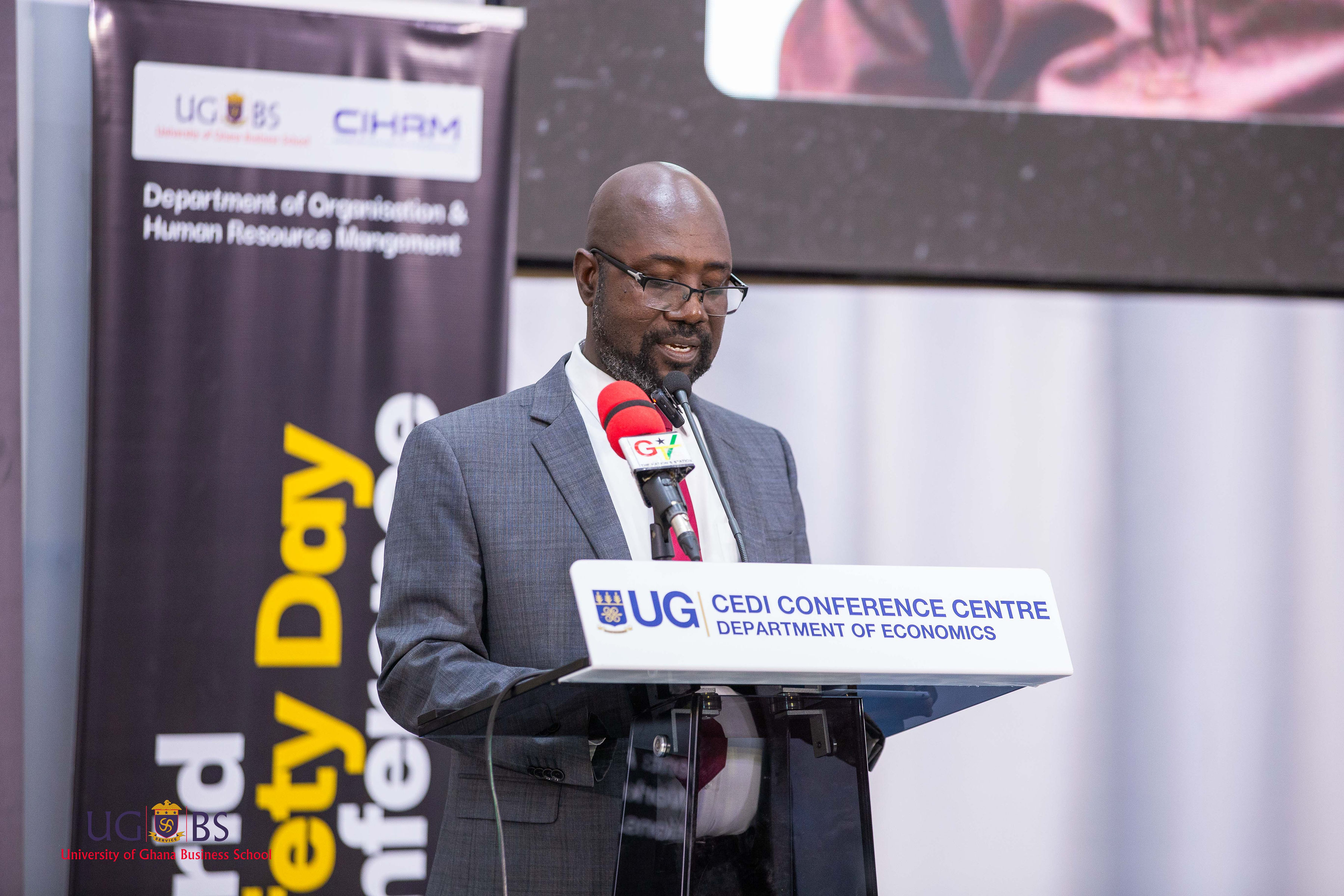
The Dean of UGBS, Prof. Ernest Y. Tweneboah-Koduah
The keynote address was delivered by Prof. Kwesi Amponsah-Tawiah, who presented a data-driven analysis on the theme. He revealed that untreated depression alone accounts for an estimated 35% loss in productivity globally. He further noted that while about 40% of employees in the United States do not report mental health challenges, approximately 75% of individuals in Africa receive no care, with only about 2% of affected persons in Ghana seeking treatment. He explained the concept of presenteeism where employees are physically present but mentally disengaged stating that it costs organisations significantly more than absenteeism. He cited estimates of up to $150 billion in annual losses in the United States due to presenteeism, with an additional $100 billion attributed to untreated mental health conditions. Prof. Amponsah-Tawiah further indicated that poor psychosocial work environments contribute to high employee turnover, with nearly 48% of employees in some contexts leaving due to adverse workplace conditions. Conversely, organisations with supportive environments experience increased profitability, higher productivity, and reduced absenteeism and turnover. Referencing frameworks by the International Labour Organization and WHO, he explained that psychosocial work environment encompasses how work is designed, organised, and managed, including leadership style, communication, work schedules, and support systems.
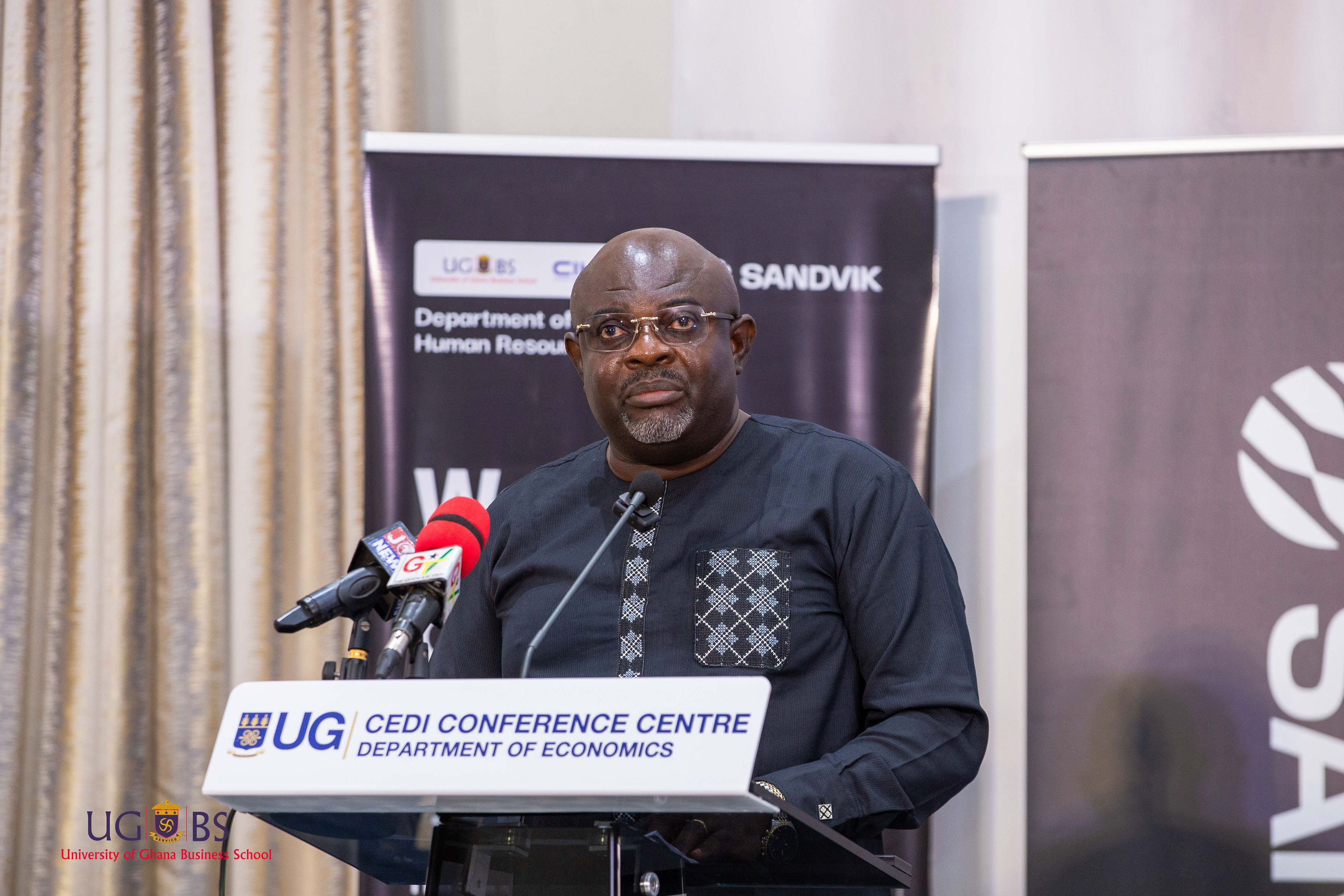
Prof. Kwesi Amponsah-Tawiah, delivering the keynote address
The Provost of the College of Humanities, Prof. Joseph Awetori Yaro, described the conference as timely and significant. He commended UGBS and the Department of OHRM for leading efforts to bring global conversations on workplace safety to the University. He noted that the event aligns with the World Day for Safety and Health at Work, established by the International Labour Organisation, and emphasised the need to broaden occupational safety to include mental and social well-being. He added that the College of Humanities is well-positioned to contribute to the discourse through disciplines such as human resource management, psychology, and economics. Prof. Yaro expressed support for institutionalising the conference as an annual event and reaffirmed the College’s commitment to promoting inclusive and healthy work environments.
The conference also featured goodwill messages from key stakeholders, including representatives from the Trade Union Congress, CIHRM, the Ghana Enterprises Agency, the Ghana Institute of Safety and Environmental Professionals, Unique Insurance Company, and the Ghana Tourism Development Company Limited. Speakers included Mr. Joshua Andah, Miss Adelaide Lartey (on behalf of the CEO of CIHRM), Mr. Eugene Agyare, Mr. Gabriel, Mr. Nuhu Salifu (Vice President, Sales Area West Africa, Sandvik), and Prof. Kobby Mensah. A panel discussion moderated by Dr. Justice Mensah brought together experts from academia and industry, including Ms. Hannah Adjei-Mensah (Korle Bu Teaching Hospital), Dr. Gabriel Odeh Apotey (Health, Safety and Environmental Expert), Prof. Daniel Frimpong Ofori (UGBS), Mr. Bertrand-Russel Nii Amu Quaye (CIHRM), Mr. Andrews Addoquaye Tagoe (General Agricultural Workers Union), and Ms. Prisca Gyapong (Sandvik). The panel explored issues related to occupational safety, health, and environment, with discussions focusing on psychosocial risks in the workplace, gaps in organisational responses, the cost of safety, and the importance of proactive risk assessment. Participants emphasised that safety is not optional but a necessary investment for sustainable organisational success.